Sound familiar?Toronto
- The call
- The keypad on the office safe blinks a low-battery warning every morning now, and whoever notices it first quietly hopes someone else deals with it before the batteries finally give out mid-week.
A community group counts the weekend's raffle and bake-sale cash on a kitchen table, then carries it home in a tote bag until the bank opens Monday, because there has never been anywhere safer to leave it.
The lock on a safe is either a mechanical dial built around a wheel pack and gates, set and tested by a trained hand, or an electronic keypad running on batteries, and each has its own service needs. A new mechanical lock is set to a combination chosen by the owner and tested through a full open-and-close cycle before installation is called finished. An electronic lock gets fresh batteries, a reprogrammed code, and a check that the low-battery warning actually sounds before it dies. Either way, nobody but the owner leaves with the working combination or code.
Sound familiar?Toronto
Safe Installation & Servicing · Toronto
Scene 1
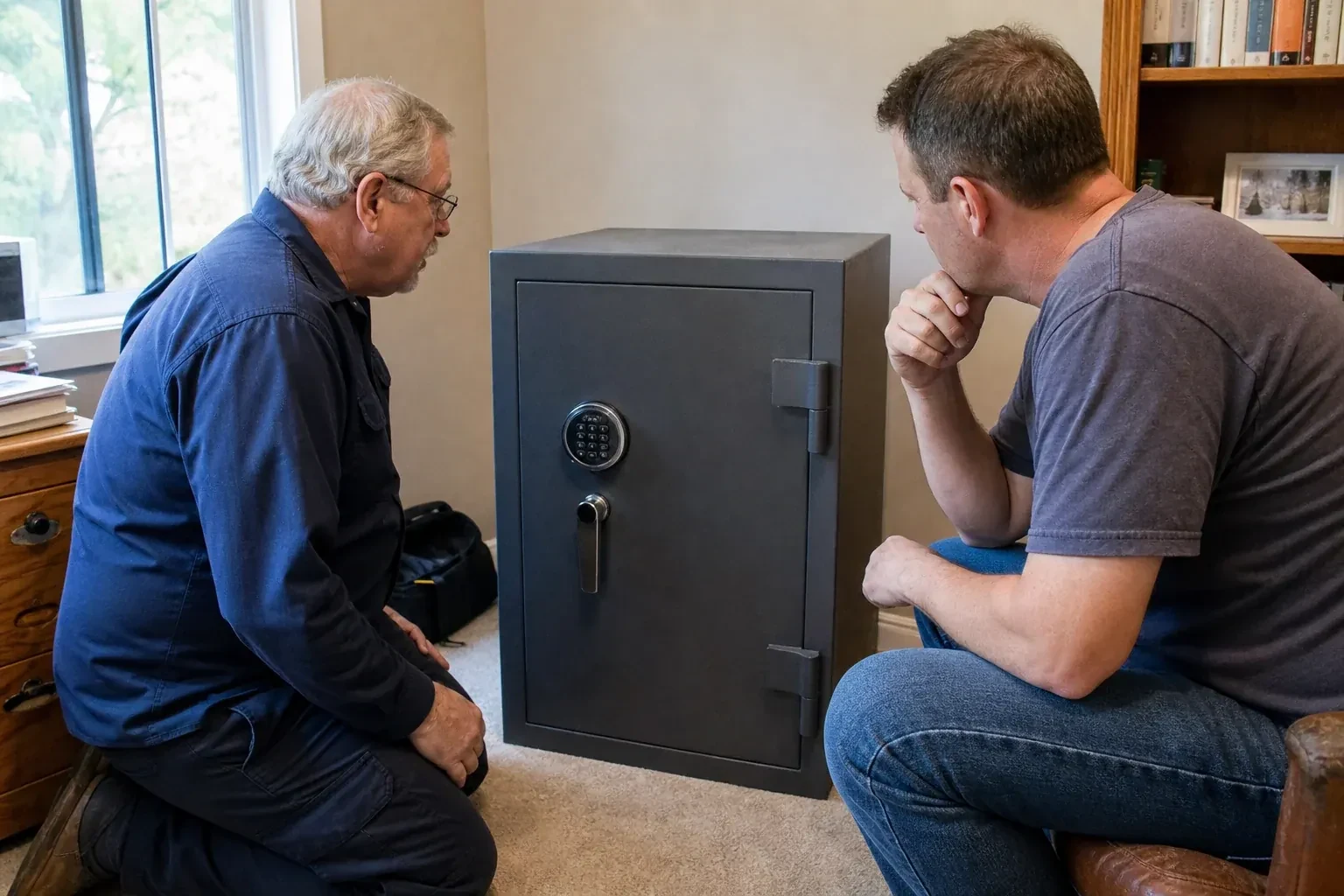
The surface behind the safe decides how it gets anchored, so it is checked before anything is ordered. Solid concrete accepts one style of anchor bolt; a wood subfloor over joists needs a different fastener reaching into structural framing rather than just the surface layer; a tiled floor cannot take a bolt at all without risking a crack around it. The locksmith also looks for slope, dampness, or a cold exterior wall that could sweat in humid weather, since all three affect where the safe should actually stand, not just how it gets bolted down.
Scene 2
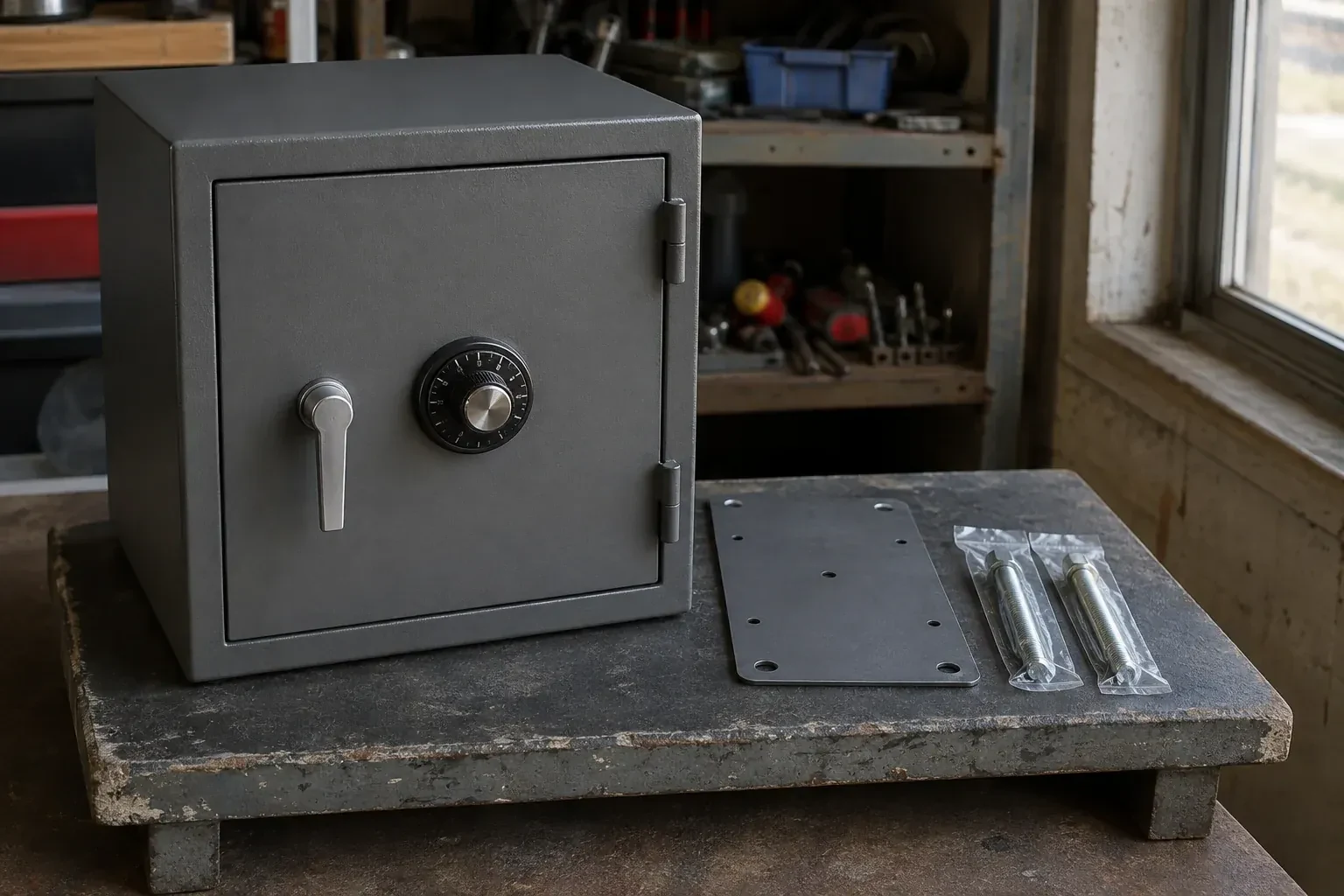
Once the safe is on site, it is moved into position with a hand truck, dolly, or rigging suited to its weight, protecting door frames and flooring along the way rather than dragging it across a room. It is set level using shims where the floor is slightly uneven, since a safe that sits even a little off level can bind its own bolt-work over time. The final position also leaves enough clearance for the door to swing fully open and for anchor bolts to be reached from underneath or behind.
Scene 3
The model number, the burglary and fire ratings, and a note of how and where the unit was anchored are all details worth keeping on file, ideally somewhere other than locked inside the safe itself. An insurer asking about coverage for cash or valuables will often want exactly this information, and having it ready saves a search through old boxes later. A few photographs taken during installation, showing the anchoring and the rating label, cover most of what gets asked for afterward.
What shapes the quoteHumberlea Lock Experts
FeesSame any hour
They come from two different kinds of tests, and burglary ratings are not all one kind either. Some are timed in minutes, measuring how long a trained attempt with real tools takes to force the door open; others are construction classifications based on steel thickness rather than a timed attack. A fire rating is measured in hours, from a furnace test tracking how hot the interior gets while the outside reaches roughly 850 to 1,000 degrees Celsius. A high number on one says nothing about the other.
Yes, provided the spot chosen still allows full anchoring and enough clearance for the door to swing open completely. A closet floor, the back of a built-in cabinet, or a recessed wall cavity can all work, though each limits the size of unit that will actually fit and reach the anchor points properly. Balancing concealment against how often the safe gets opened is worth discussing before a spot is chosen.
Delivery and the final move into position are part of the service, using equipment suited to the safe's actual weight rather than improvising with furniture dollies or straps meant for lighter loads. The route in is measured ahead of time so doorways, stairs, and tight turns are accounted for before the unit arrives, which avoids a surprise at the one hallway that turns out to be too narrow.
TorontoOntario
Safe Installation & Servicing · Fairhaven, Humberlea, Kingsview Village, Martin Grove Gardens, Pine Point, Princess Anne Manor, Richview Gardens, St. Phillips, Westmount, Weston
Every square is one home in a hundred.
On-site assessment
A community group counts the weekend's raffle and bake-sale cash on a kitchen table, then carries it home in a tote bag until the bank opens Monday, because there has never been anywhere safer to…
(289) 804-5807, open 24/7.
On-site assessment preferred · (289) 804-5807, open 24/7