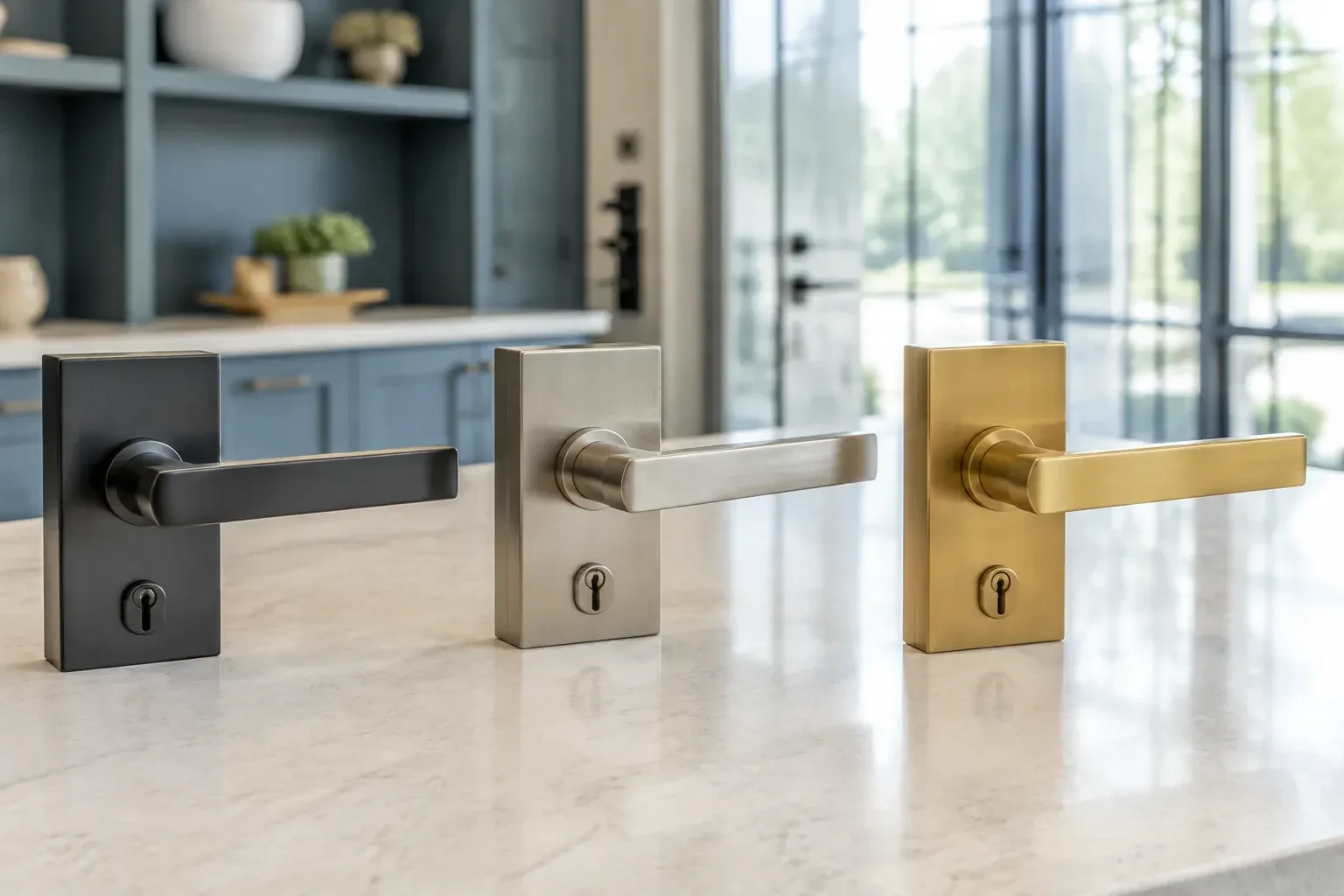
Sound familiar?Toronto
- The call
- The team has grown past the point where one shared key still makes sense. New hires need a way in before a manager arrives, and the current setup cannot tell one person's entry from another's.
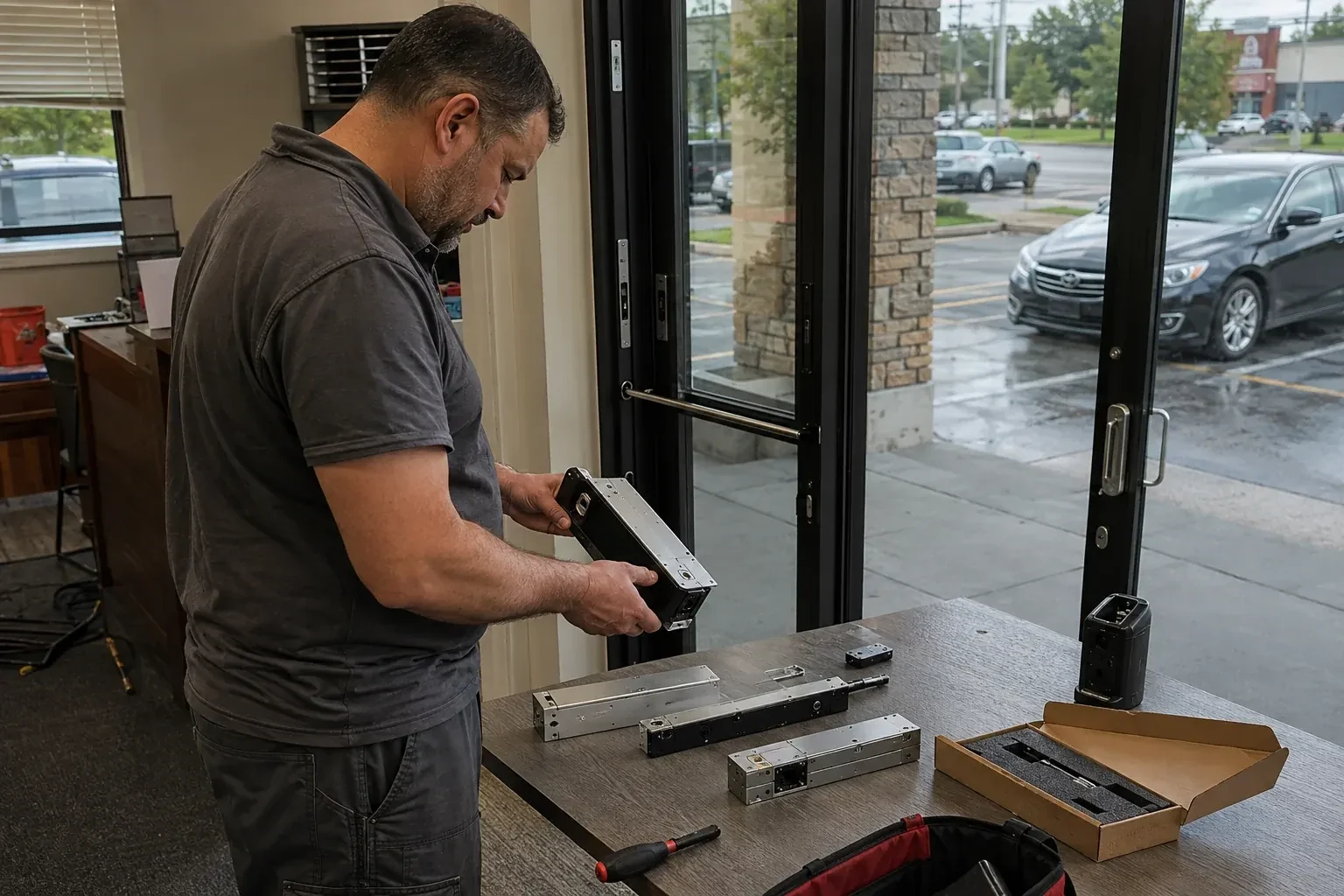
You just leased the empty unit next door and want the new tenant to open their own suite without a key to yours, to the loading dock, or to the electrical room down the hall.
Access control installation swaps a shared metal key for an electronic one: a card, a fob, a code, or a phone tap that a controller checks against a list the business manages. When someone leaves the company, their credential is switched off in seconds instead of triggering a rekey of every door they could open. The reader and locking hardware go in at each entrance that needs it, wired to a controller that holds the schedule, and the whole system is handed to the business to run once it has been tested and confirmed working.
Sound familiar?Toronto
Access Control Installation · Toronto

Scene 1
Before any hardware is chosen, the locksmith sits down with whoever will administer the system afterward and works out what it actually needs to do: which doors deserve their own control, whose entry needs a record, whether one opening keeps different hours than another, and who should be able to add or remove a credential once the job is finished. This conversation shapes every choice that follows, from a single standalone keypad on one door to a networked controller running several openings on one schedule, and it is where the business, not the installer, sets the priorities the system is built around.
Scene 2
Each door is tested the same way regardless of how simple or complex its hardware is: a valid credential releases it, a disabled one does not, the request-to-exit device or push bar releases a magnetic lock on demand, and the door position switch correctly reports open and closed. Where a fire alarm interface is fitted, the locksmith confirms the lock actually releases when the alarm activates, not only when it is reset afterward. The battery backup is tested by removing main power briefly and confirming every door still behaves the way it is meant to.
Scene 3
Where a controlled door has a mechanical override, that key is worth treating with the same care as any master key: held by a named person or two, not left in a drawer everyone can reach, and used mainly as a fallback rather than a daily habit. Because that key bypasses the electronic record entirely, using it routinely quietly undoes the audit trail the system was installed to provide, on any door where one is fitted. Keeping it for genuine emergencies is what keeps the electronic system the normal way in, and the key the backup it was meant to be.
What shapes the quoteHumberlea Lock Experts
FeesSame any hour
A standalone reader at a single door keeps working during a network or Wi-Fi outage, since it checks its own stored list rather than relying on a live connection. A networked controller generally keeps making local decisions at each door as well, though live updates, remote changes and off-site log access may pause until the connection returns.
In most cases, yes. An access control installation can be planned to share information with an existing alarm panel, so an arm-or-disarm event lines up with whoever unlocked the door, and with a camera system, so a recorded clip can be matched to a specific credential rather than only a timestamp. The exact integration depends on what the existing alarm and camera equipment support.
A standalone unit is a self-contained reader and lock at one door, holding its own list of credentials, though it can still need a power or network connection to run. A networked system ties several doors to shared management, sometimes through more than one controller, aggregating schedules and combining logs across all of them. The right choice depends on how many doors need controlling and whether the business wants a single place to manage all of them, rather than one being universally better.
TorontoOntario
Access Control Installation · Fairhaven, Humberlea, Kingsview Village, Martin Grove Gardens, Pine Point, Princess Anne Manor, Richview Gardens, St. Phillips, Westmount, Weston
Every square is one home in a hundred.
On-site assessment
You just leased the empty unit next door and want the new tenant to open their own suite without a key to yours, to the loading dock, or to the electrical room down the hall.
(289) 804-5807, open 24/7.
On-site assessment preferred · (289) 804-5807, open 24/7