Skip to content
HumberleaLock ExpertsOpen 24/7 (289) 804-5807
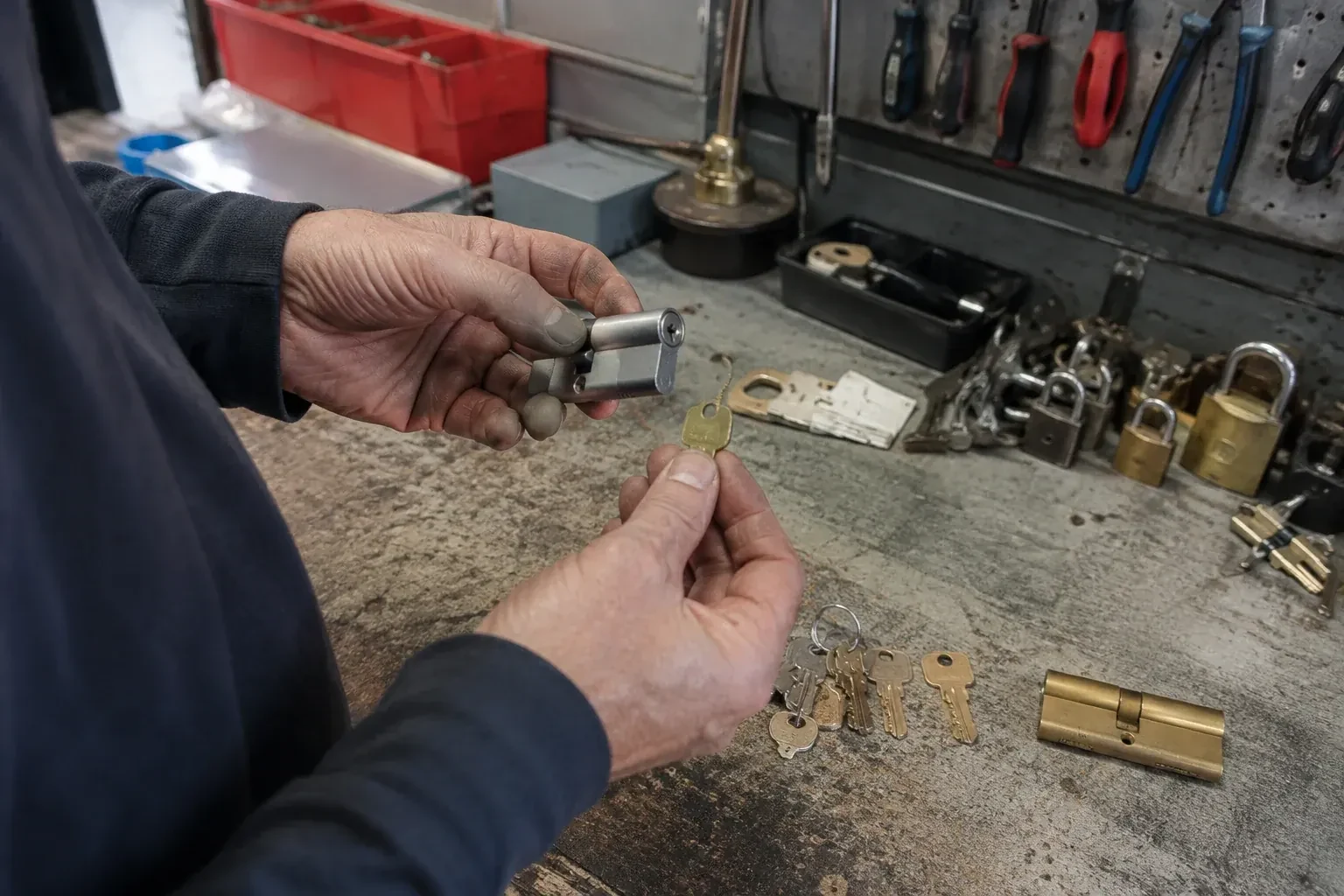
Hands holding a silver-colored lock cylinder and a brass-colored key above a workbench with padlocks, keys and tools. — Master Key System Design, Toronto

Commercial · Toronto

Master Key System Design

A self-storage operator wants the office, the tenant gate and the equipment shed on three different levels of access for staff, but every lock on the property currently answers to the same handful of interchangeable keys handed out over the years.

In plain words

The process behind a master key system runs from conversation to chart. First comes a walk-through of every door and a conversation about who needs to open what, now and as the business grows. Next comes the design itself: grouping doors into change-key sets, deciding where sub-masters belong, and reserving a top-level master for a short list of people. Then the cylinders are pinned, cut and tested individually before any key is handed over. What the owner receives at the end is not just keys but a working hierarchy matched to compatible hardware and documented in a chart they control.

Sound familiar?Toronto

The call
On the warehouse floor, a shift supervisor's key opens the loading dock, the tool crib and the manager's office, though only the dock is really part of the job. Nobody planned it that way; the key was simply copied from whichever one was closest at hand.
NextHow the visit goes

Master Key System Design · Toronto

How the visit goes

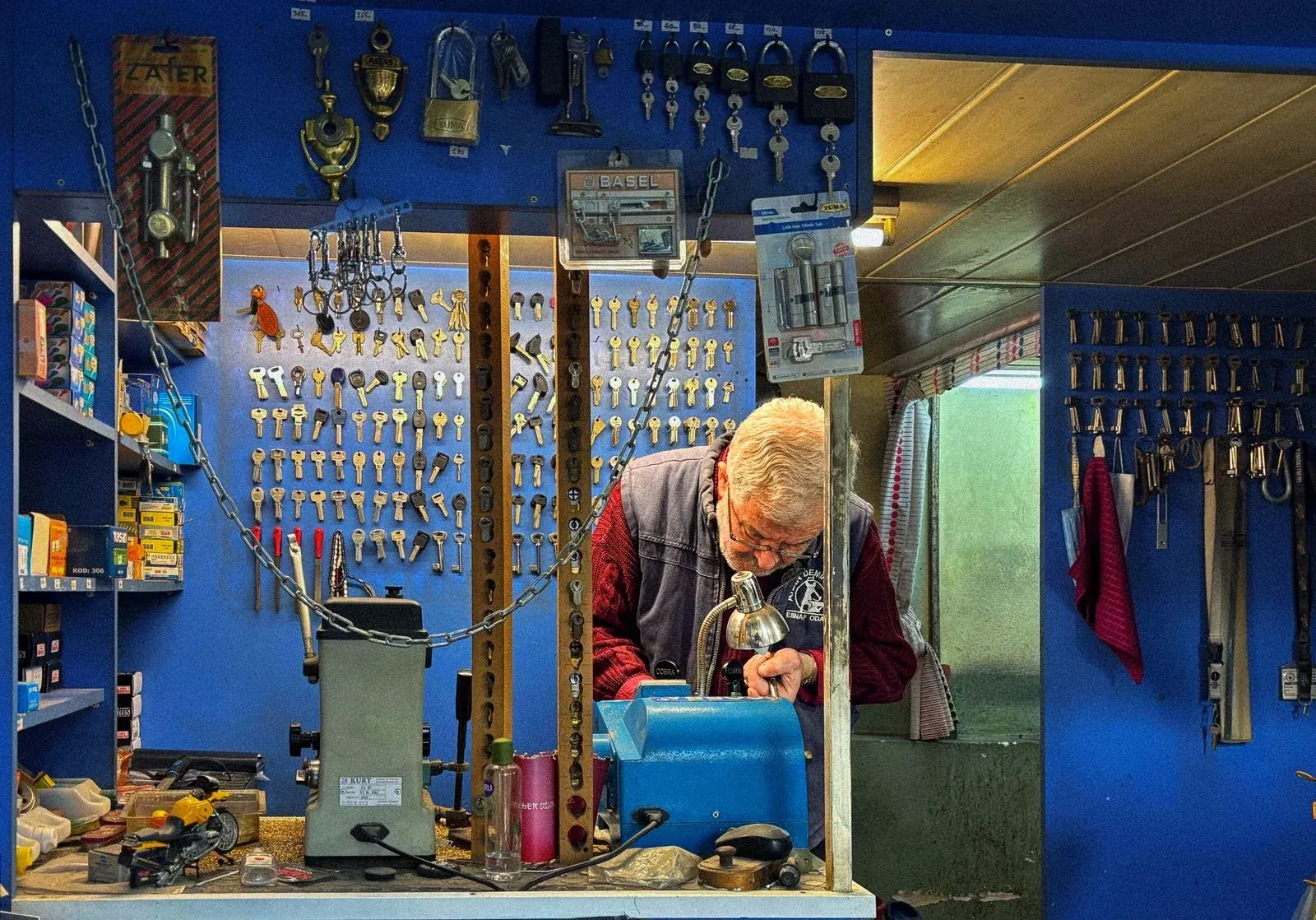
Person leaning over a blue bench machine in a small shop with keys, padlocks and door hardware displayed on blue walls.
  1. Scene 1

    Who holds the top-level master

    A single top-level master, if the property has one at all, is deliberately kept to the shortest list the business can operate with. The check here is a direct conversation about who genuinely needs to open every door on the property versus who only thinks they might one day, since every extra holder is another way a full-access key can go missing. This conversation happens before cutting begins, because narrowing the list afterward means recovering and replacing keys that have already been issued to people no longer on it.

  2. Scene 2

    Bringing electronic and mechanical access into one plan

    Where a property mixes mechanical cylinders with keypad or card-based doors, the mechanical hierarchy is designed to line up with the electronic access groups rather than run as a separate, unrelated system. A department that sits at one sub-master level on the mechanical side is kept at a matching level on any electronic doors it also uses, and any mechanical override cylinders behind an electronic lock are pinned into the same chart as every other door, so one document still describes the whole property.

  3. Scene 3

    A plan for the next new hire or department

    Adding someone to the system afterward is usually a matter of consulting the existing chart and issuing them a copy of the authorized key their role already calls for, rather than opening the whole hierarchy back up. A genuinely new combination is only usable on doors whose cylinders are pinned to accept it, so the same chart shows whether that means picking an existing bitting or scheduling a repin, keeping the decision informed rather than improvised.

In the van

  • Compatible replacement cylinders
  • Keying chart
  • Cylinder decoders
  • Plug follower and key gauge
  • Cylinder pinning kit

What shapes the quoteHumberlea Lock Experts

Collecting and retiring old keys
Gathering up old keys that are being replaced, confirming they no longer operate any cylinder, and retiring them from circulation is a small additional step some businesses want included, separate from the core design and cutting work.
Sub-master levels beyond the basics
One or two sub-master levels are typical for most properties. A more elaborate hierarchy, with several sub-masters covering overlapping departments or floors, takes longer to design correctly and test, and that additional design and testing time is reflected in the quote.
Keyway chosen: standard or restricted
A restricted or patented keyway costs more in blanks and administration than a standard keyway, since duplication is controlled through the manufacturer's authorized record rather than cut anywhere. Higher-risk doors, such as records or cash rooms, often justify that additional control; lower-risk doors may not.

FeesSame any hour

Have it ready

Before you call · 0 / 3

(289) 804-5807

Things people wonder about

What does key control actually mean?

It means knowing, at any time, how many keys exist for a given door or level, who holds each one, and how a new copy would be authorized. A master key system supports key control by design, since keys are marked by role, logged by serial, and cut only against the chart, rather than copied informally whenever someone asks for one.

Can different lock brands be mixed in one master key system?

Sometimes, but it depends on the keyway and pinning platform each brand uses; some are compatible with one another and some are not. Where a mix already exists on a property, the assessment identifies which cylinders can be brought into a single hierarchy and which need replacing with a matching platform so every level pins correctly across the whole set of doors.

Can key duplication be restricted so copies cannot be cut elsewhere?

Yes. With a restricted or patented keyway, blanks are only available through the manufacturer's authorized record, so a copy is not cut at an ordinary hardware counter without going through that channel. This does not make a key impossible to duplicate, but every legitimate copy passes through a record the owner controls, which a standard keyway cannot offer.

Torontoinformation

TorontoOntario

Town
Toronto
In business
13 years
Hours
Open 24/7
Nights, weekends and holidays, same fees
Visits
On-site assessment preferred. Request a visit or call.

2021 census: what it means at the door

Every square is one home in a hundred.

  • 58 in 100 homes · older homes
  • About 58% of homes in Toronto were built in 1980 or earlier, according to the 2021 Census.Where most homes were built decades ago, doors often still carry their original mortise locks and brass knobs. That hardware can usually be cleaned, re-sprung and kept in service, with a modern deadbolt added above it for strength without losing the look.
  • Single-detached houses make up about 23% of homes in Toronto (2021 Census).In a building, a lockout happens in a hallway rather than a porch, and the neighbours notice. A locksmith confirms you belong to the suite, opens the door with the least fuss the lock allows, and leaves the door and cylinder intact for the night.

Source: Statistics Canada, Census Profile

Open Toronto in Google Maps

On-site assessment

Request a visit.

A self-storage operator wants the office, the tenant gate and the equipment shed on three different levels of access for staff, but every lock on the property currently answers to the same handful of…

(289) 804-5807, open 24/7.