Skip to content
HumberleaLock ExpertsOpen 24/7 (289) 804-5807
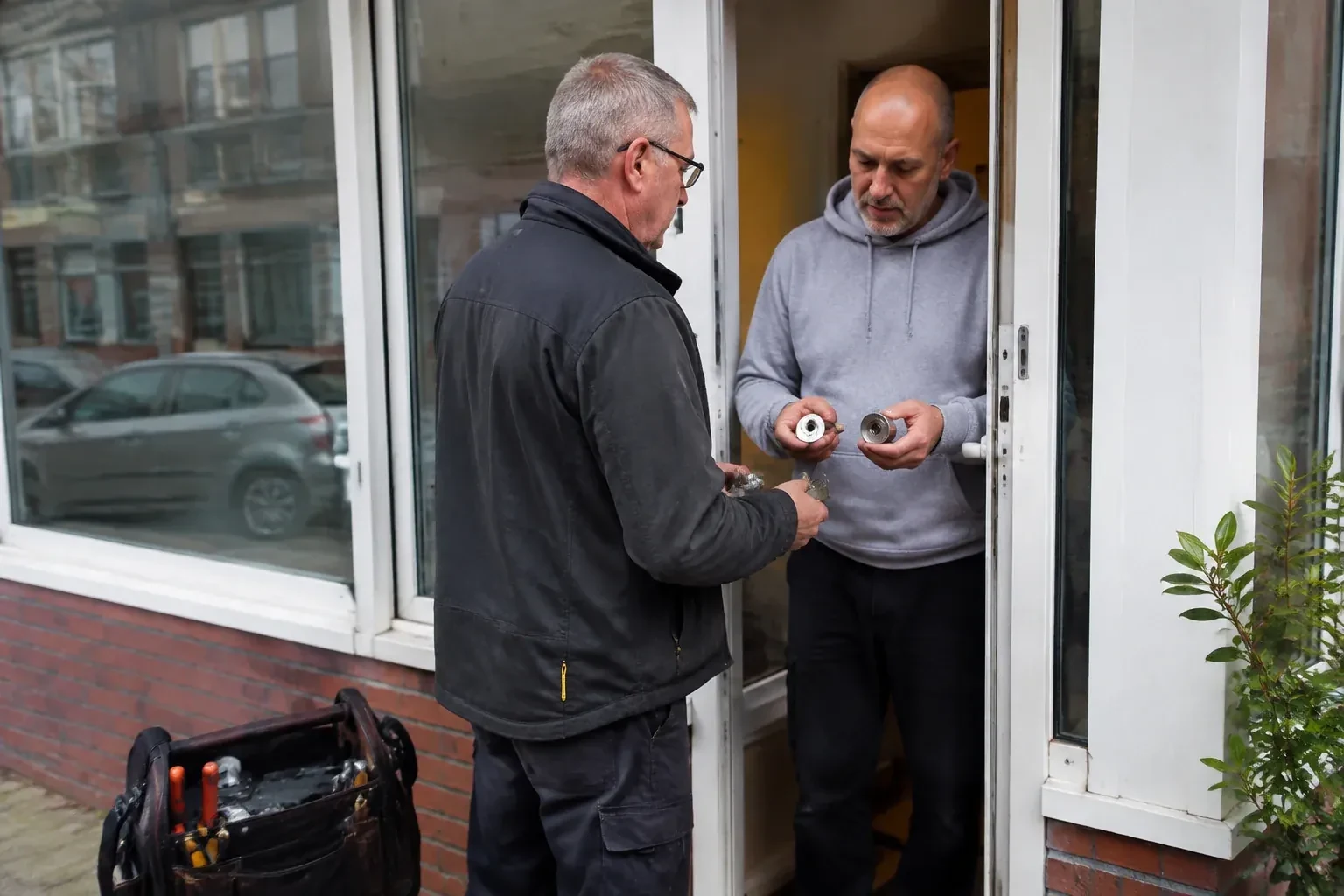
Two people holding lock components at an open glazed door, with a tool bag beside the entrance. — Business Lockout Service, Toronto

Lockouts · Toronto

Business Lockout Service

You signed the lease on the unit last week and the landlord handed over possession, but the previous tenant's locks are still on both doors and no keys came with them. Your fixtures arrive tomorrow and the doors will not open.

In plain words

A business lockout service reopens commercial premises when the door is locked and nobody on site can open it. The locksmith begins by confirming that the person asking for entry has authority to act for the business, through identification and a document or a phone call that ties them to the premises. The hardware and any connected alarm or access system are identified next, and the door is opened by the gentlest method the lock allows. Once staff are inside, whatever caused the lockout is put right so the doors lock again at closing, and a written account of the work is left for the business's records.

Sound familiar?Toronto

The call
It is ten to nine, three staff are on the sidewalk with their coffees, and the key that has opened the glass front door for six years will not turn. The cylinder feels gritty, the door is locked, and the first customer is already parking.
NextHow the visit goes

Business Lockout Service · Toronto

How the visit goes

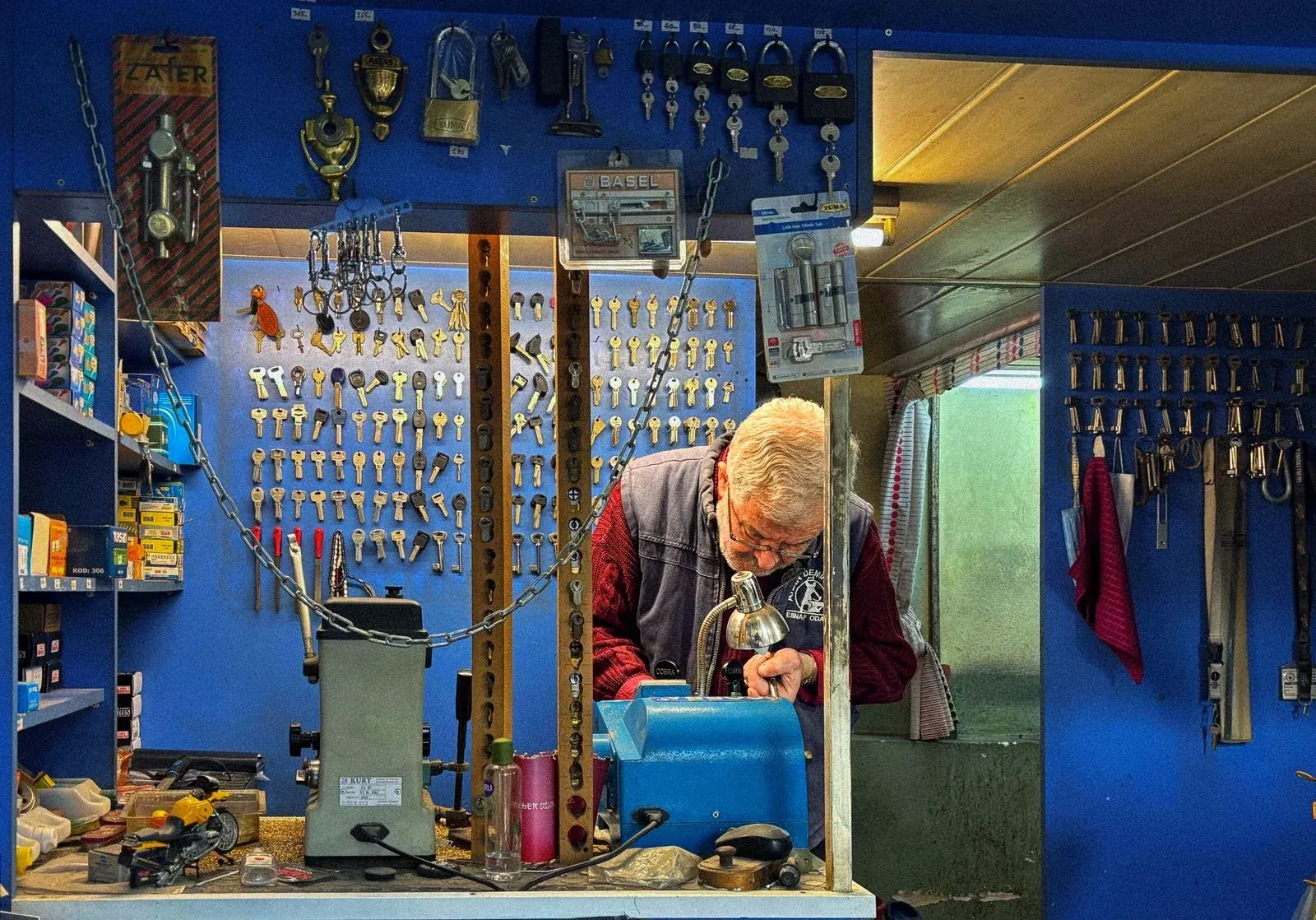
Person leaning over a blue bench machine in a small shop with keys, padlocks and door hardware displayed on blue walls.
  1. Scene 1

    What happened to the key

    The story of the key shapes everything after the door opens. A key sitting in an absent manager's pocket means the lock is sound and only entry is needed. A key that was lost on transit or never returned by a former employee is still out there, and the visit should end with that key made useless. A key that turned without result points to a worn cam or a failed deadlatch spring, and a key that snapped calls for careful extraction before any opening. A lock that worked at closing and refuses at opening suggests cold, grit or a dropped door rather than a cylinder fault. A minute on this saves a repeat call.

  2. Scene 2

    Making an unreturned key useless

    When a key is lost or unreturned, the second half of the visit is rekeying. Mortise and rim cylinders are removed, the plug slid out with a follower, and the bottom pins changed to a new combination so a fresh key operates them and the old one turns nothing. Where the building uses interchangeable cores, the core is swapped for one on a new combination. Cylinders that shared the old key are brought onto the new one, and if the door sits within a master key system the change is planned with the property manager so building keys keep working. New keys are cut, tested in every door and recorded against named holders.

  3. Scene 3

    Access control back on its feet

    When the lockout involved a reader, strike or magnetic lock, you leave with the system working as it was designed to. Power and backup batteries are restored, the strike or lock is confirmed to hold and release on command, and the reader accepts the fobs it should. Credentials belonging to people who have left are deactivated with the provider while everyone is thinking about it. The mechanical override key is the piece most businesses misplace; it should live with a named keyholder away from the door, not in a drawer inside. A short note of the controller's location and the provider's contact goes into the record for the next person who needs it.

In the van

  • Key blanks and code cutter
  • Cylinder decoder and plug spinner
  • Control keys and core-removal tools
  • Interchangeable cores pinned to system
  • Storefront deadlock and deadlatch bodies

What shapes the quoteHumberlea Lock Experts

How many doors are involved
One front door is the simplest visit. A front door, a rear exit device, a roll-up padlock and a cash office add hardware to open and, often, cylinders to key alike afterwards.
Standard or high-security cylinder
Restricted keyways, security pins and patented cylinders take longer to open and cost more to replace, and their keys are cut from system records rather than copied at a counter.
Storefront, lever, mortise or exit device
An aluminium storefront cylinder, a cylindrical lever lockset, a full mortise lock and the trim of an exit device each take different tools and time to open, and the hardware on your door sets the starting point.

FeesSame any hour

Have it ready

Before you call · 0 / 3

(289) 804-5807

Things people wonder about

Do you work with our alarm company and access-control provider?

Yes, and it makes the visit smoother. The alarm station is told an entry is expected and the authorised person handles the disarm and password. For access control, the provider can often confirm the controller's status, unlock a magnetic lock remotely, or re-enrol fobs once you are inside, while the locksmith handles the mechanical side and the override cylinder. Nobody's wiring is cut; each party does the part it is set up to do.

Can we put a keyed deadbolt on both sides of the back door for extra security?

On a door people leave through while the building is occupied, the door needs to open from inside with one motion and no key, so a key-both-sides bolt is not the right tool there. Security is added instead with a heavy-duty exit device and a reinforced strike, a keyed trim outside, an alarm contact, or a door position sensor on the access system, all of which keep the way out clear.

Last night the door would not lock either. Is that the same problem?

Sometimes, though a deadlatch that will not catch at closing and a bolt that refuses to withdraw at opening are different mechanisms, not automatically the same fault. A door dropped on its pivots or a cam slipped behind the cylinder can affect either one; a closer stopping short of the strike explains a latch that will not catch but not a bolt that will not retract. The locksmith checks each symptom on its own during the visit and tests the door closing under its own weight before leaving.

Torontoinformation

TorontoOntario

Town
Toronto
In business
13 years
Hours
Open 24/7
Nights, weekends and holidays, same fees
Visits
On-site assessment preferred. Request a visit or call.

2021 census: what it means at the door

Every square is one home in a hundred.

  • 58 in 100 homes · older homes
  • About 58% of homes in Toronto were built in 1980 or earlier, according to the 2021 Census.Where most homes were built decades ago, doors often still carry their original mortise locks and brass knobs. That hardware can usually be cleaned, re-sprung and kept in service, with a modern deadbolt added above it for strength without losing the look.
  • Single-detached houses make up about 23% of homes in Toronto (2021 Census).In a building, a lockout happens in a hallway rather than a porch, and the neighbours notice. A locksmith confirms you belong to the suite, opens the door with the least fuss the lock allows, and leaves the door and cylinder intact for the night.

Source: Statistics Canada, Census Profile

Open Toronto in Google Maps

On-site assessment

Request a visit.

You signed the lease on the unit last week and the landlord handed over possession, but the previous tenant's locks are still on both doors and no keys came with them.

(289) 804-5807, open 24/7.