Sound familiar?Toronto
- The call
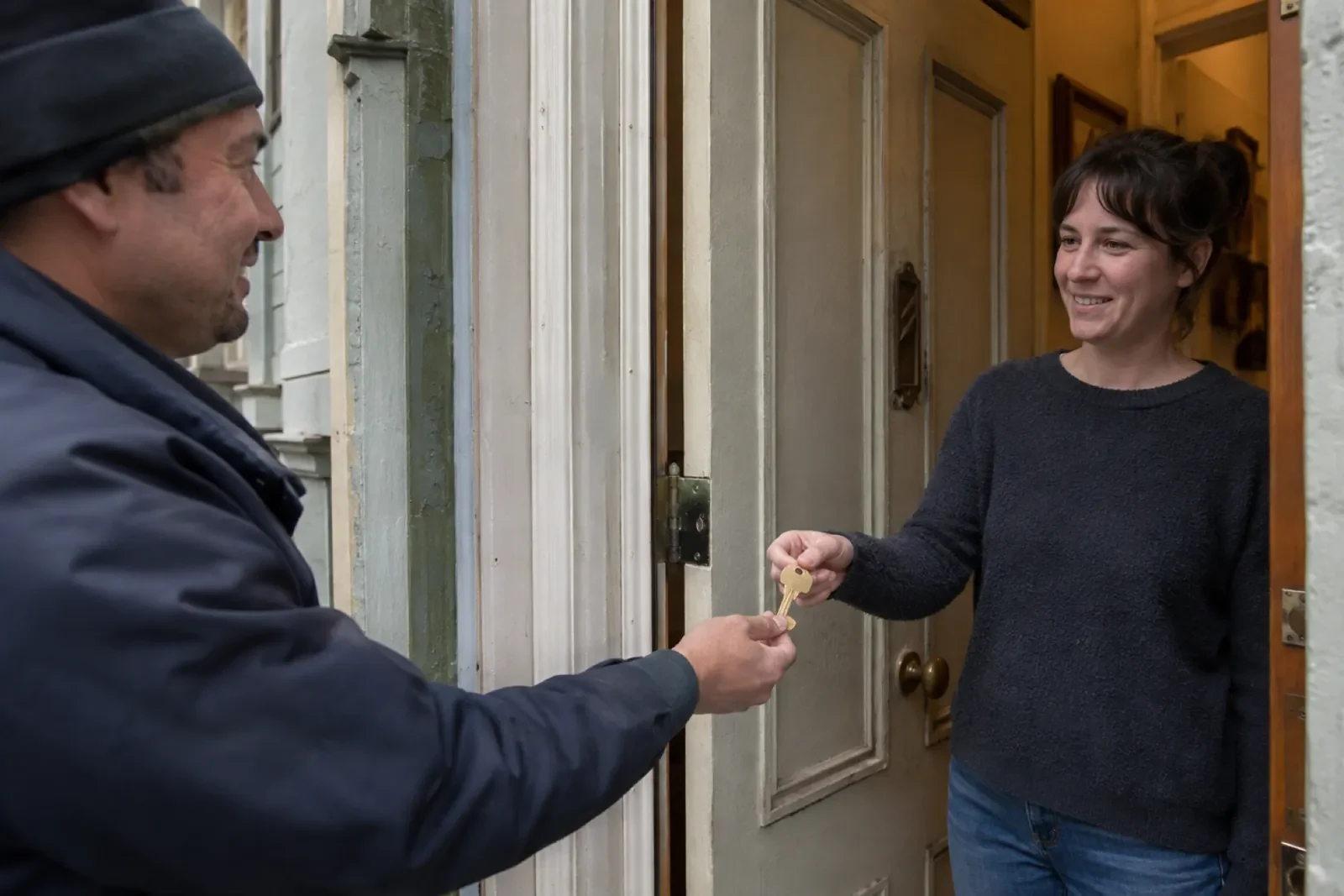
- You let a part-time employee go on Friday. The shop key is on a ring in their apartment, or their car, or a friend's kitchen, and on Monday morning the register and the stock room open with it.
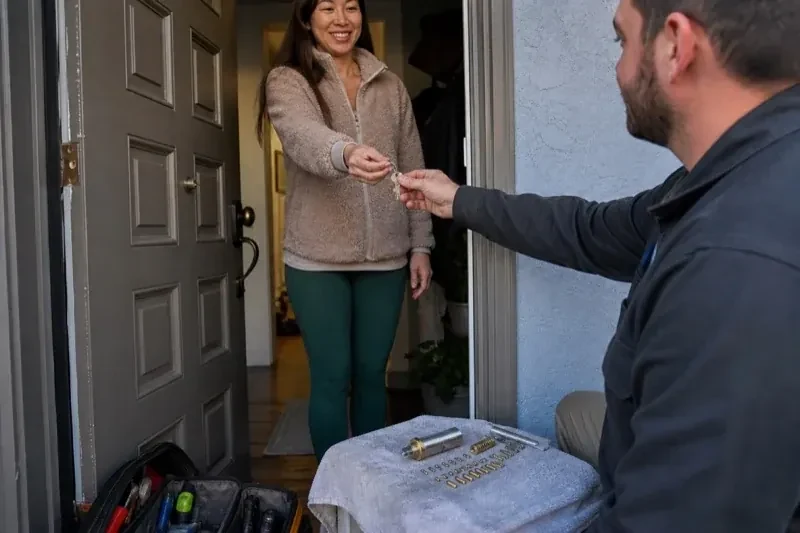
Your purse was taken from the back of a chair at a restaurant. The cards can be cancelled by phone tonight, but the house keys were in the side pocket beside a driver's licence that shows exactly where those keys fit.
The first useful move after losing a key is to think about where it worked rather than where it went. A house key commonly opens more than the front door: the back door, a side entrance, the door from the garage into the house, a shed, a gate padlock, sometimes a storage room or a mailbox. A same-visit rekey starts by listing those openings, then treats the ones that are yours to change and points you to the right person for the ones that belong to a landlord, a condominium or the postal service. Every cylinder on the list leaves the visit taking a new key.
Sound familiar?Toronto
Lost Keys — Same-Visit Rekey · Toronto
Scene 1
Rekeying suits hardware in sound condition, and most cylinders on a house qualify. The locksmith flags the exceptions while the list is being made: a plug worn oval by decades of use, a cylinder packed with salt and grit from a side door that faces the driveway, a knob lock so light it offers little resistance, or a keyway that no longer has blanks available. For those, a replacement cylinder or a complete new deadbolt keyed to match the rest is proposed as its own item, so you decide door by door. The aim is that every cylinder leaving the visit on a new key is one that will keep turning well for years.
Scene 2
Restricted and patented keyways rekey in much the same way, with more parts and a little more care. A high-security cylinder's own elements, a sidebar's finger pins, a rotating element or another system-specific part, are reset to the new key's profile alongside the ordinary pins, and the finished plug is checked before refitting. Key blanks for these systems are issued through whatever authorised channel that system uses, a letter, a registered account, a dealer agreement, or sometimes a key card; bring whatever credential you were given. The reward is that copies of the new key can only be made through that same channel, one of the stronger kinds of key control a household can have.
Scene 3
You leave with a set of keys whose count you agreed and can name: one each for the adults, one for the neighbour, one in the lockbox. That is the count of authorised keys, not proof against every copy unless the key system also controls its blanks. A small habit keeps it honest: when a key goes to a contractor, a cleaner or a house sitter, note it and get it back, or rekey when the arrangement ends. From today the answer is a figure you wrote down, not a guess about who might still hold something from years ago.
What shapes the quoteHumberlea Lock Experts
FeesSame any hour
An authorised adult should be present at the start, for identification and to agree the list of doors and the number of keys, and at the end, to test every key and take the count. In between, the work happens at the doors and on the van, so you are free to get on with your day inside. A property manager or a family member with your authorisation can stand in if you cannot be there.
Lock manufacturers list moving as one of the main reasons to rekey, and it is easy to see why: previous owners, their relatives, a cleaner, a dog walker and a contractor may all hold copies you know nothing about. Rekeying every exterior cylinder in one visit resets the count to the keys in your hand, and it is a convenient moment to put every door on a single key as well.
Yes. Those cylinders let an owner change the key with a small learn tool, but only while a working key is in hand. Without one, a design such as Kwikset SmartKey is removed and placed in its own reset fixture, returning it to a blank state; other cylinder types are rekeyed by their own method instead. A new key is then set and the lock goes back on. It is a few extra minutes rather than a replacement.
TorontoOntario
Lost Keys — Same-Visit Rekey · Fairhaven, Humberlea, Kingsview Village, Martin Grove Gardens, Pine Point, Princess Anne Manor, Richview Gardens, St. Phillips, Westmount, Weston
Every square is one home in a hundred.
On-site assessment
Your purse was taken from the back of a chair at a restaurant.
(289) 804-5807, open 24/7.
On-site assessment preferred · (289) 804-5807, open 24/7