Sound familiar?Toronto
- The call
- Police have come and gone, the occurrence number is on a sticky note, and you are standing in a cold hallway looking at a splintered frame, wondering how the house gets locked before everyone tries to sleep.
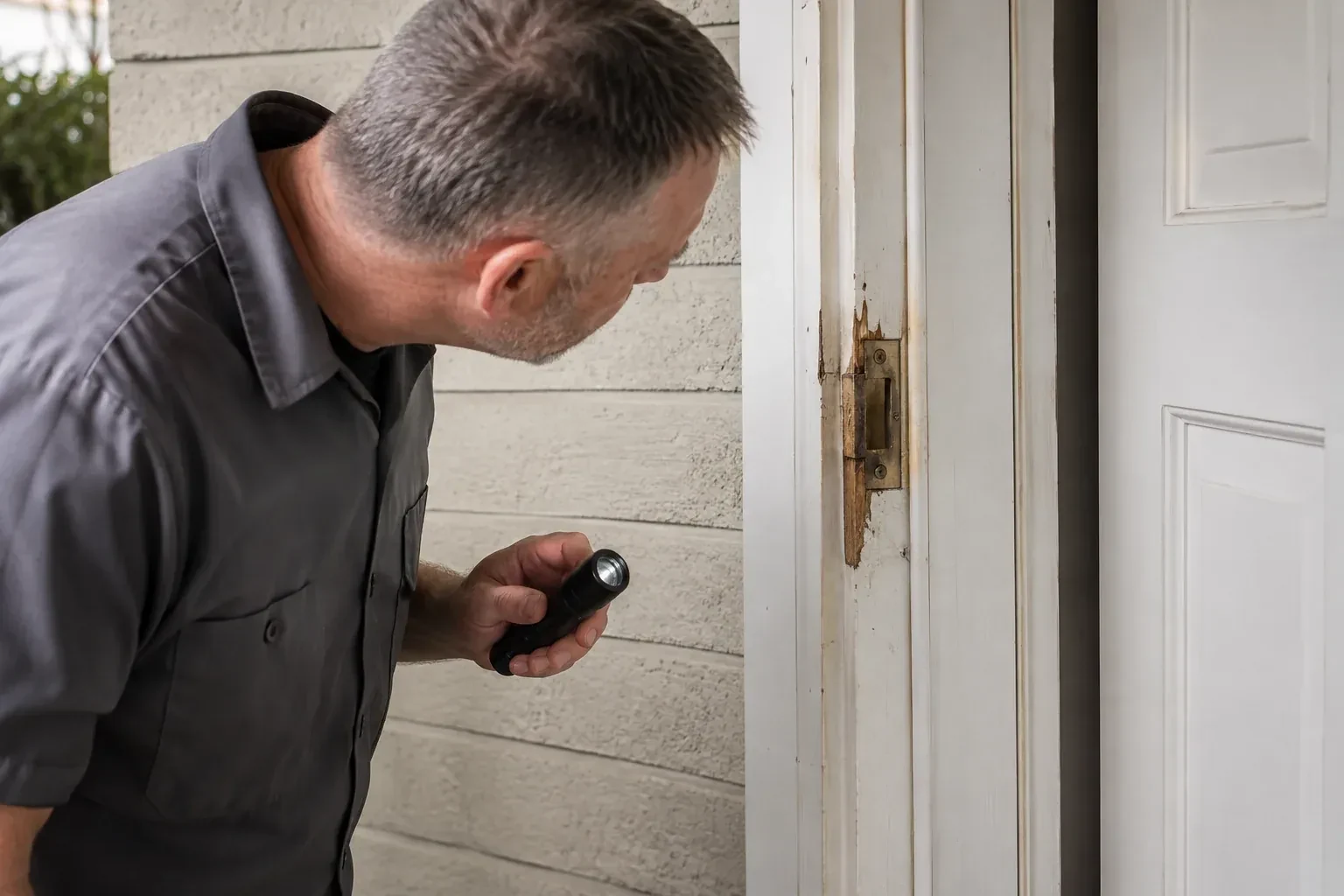
They did not get in. The attempt left a screwdriver gouge in the door edge, a strike plate bent outward and a deadbolt that now needs a shove to throw.
Break-in damage lock repair is the visit that turns a forced door back into a locked one. The locksmith first confirms you own, rent or manage the property, then looks at everything the attack touched: the lock, the bolt, the strike plate and wood behind it, the door edge, the hinges and any glass beside the door. The opening is secured before the visit ends, and the parts that gave way are replaced with stronger hardware and longer fasteners set into the framing. Any lock a taken key could open is rekeyed or replaced, so the house is closed on your terms again.
Sound familiar?Toronto
Break-In Damage Lock Repair · Toronto
Scene 1
The first minutes are about people, not hardware. The locksmith confirms that the caller has authority over the property: photo identification with the address, a lease, an ownership record or an instruction from the property manager. A break-in is precisely the moment a stranger could ask for a lock to be changed, so the check protects the household. The second question is whether anyone is hurt and whether the intruder is certainly gone; if the police have not yet been called, that call comes before any work, and the door is left as found until they say the scene is released. Only then does the assessment of the opening begin.
Scene 2
The strike is where most forced doors failed, so it is rebuilt rather than reattached. The old plate comes off and the bolt pocket is cut to full depth, since a pocket that is too shallow stops the bolt from extending completely and leaves it easier to push back. A security strike with a boxed pocket is set flush into the jamb, its long screws driven through the jamb and shim space into the wall stud, with the longest screws placed nearest the door stop where the bolt bears. Pilot holes are drilled first so the screws seat without splitting the repaired wood. The bolt now pushes against framing lumber instead of two short screws in soft trim.
Scene 3
You are left with a plain written account: which opening was forced, what was found damaged, what was replaced, what was reinforced and with what, which locks were rekeyed and how many keys were cut, and what remains for another trade. The photographs taken before work began sit alongside it. The broken hardware is bagged for the adjuster unless you say otherwise, and the receipt for the securing visit goes in the same folder, since insurers ask policyholders to keep damaged property and receipts. Together these turn a stressful evening into a claim file that answers questions before they are asked.
What shapes the quoteHumberlea Lock Experts
FeesSame any hour
Everything those keys fit. That usually means the front, back and side doors, the garage man-door, the mailbox and any padlocks, and in a rental the suite door with the landlord's involvement. Rekeying changes a serviceable cylinder to answer to a new key, and a cylinder that cannot be rekeyed is replaced instead. Doing every affected opening in one visit, keyed alike where the cylinders are compatible, means no forgotten door still answers to the stolen ring.
Yes, in a good way. A suite door that opens onto a corridor is meant to close and latch on its own every time, so the repair uses hardware suited to a labelled fire door, keeps the self-closing device adjusted and operating, and adds no holes or plates the label does not allow. The building's manager is normally involved, and the locksmith works with the door's rating rather than around it.
Yes, unless the insurer has already said they are not needed. Insurers generally ask policyholders to retain damaged property until the claim is settled, and a bag holding the twisted cylinder, torn strike and split wood answers an adjuster's questions more clearly than any description. The locksmith hands them over at the end of the visit along with a written note of what was replaced. Photographs of the parts in place, before removal, complete the record.
TorontoOntario
Break-In Damage Lock Repair · Fairhaven, Humberlea, Kingsview Village, Martin Grove Gardens, Pine Point, Princess Anne Manor, Richview Gardens, St. Phillips, Westmount, Weston
Every square is one home in a hundred.
On-site assessment preferred · (289) 804-5807, open 24/7