Sound familiar?Toronto
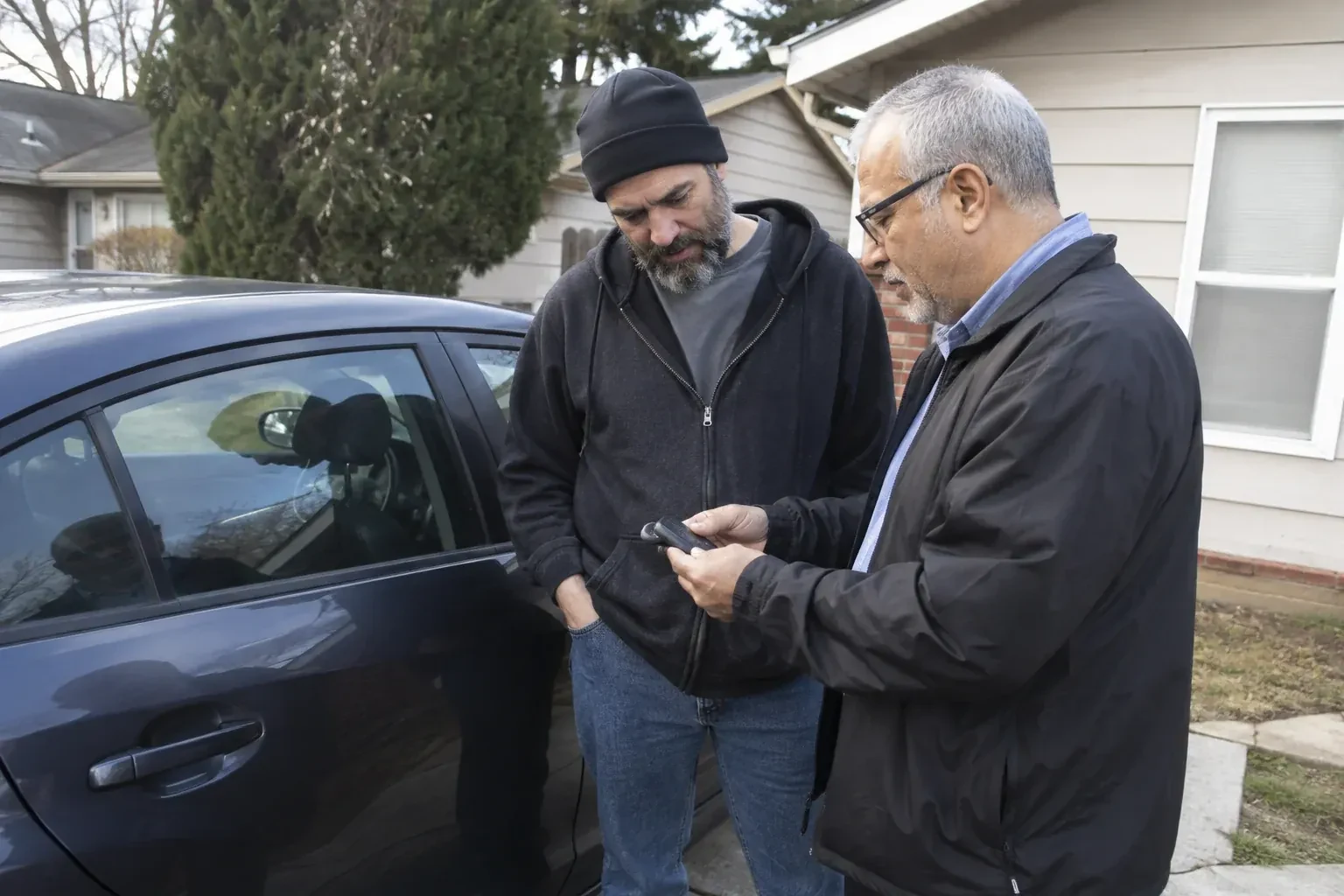
- The call
- The key snapped at the head while you were turning it in a stiff, frosty door lock. Half the blade is in your hand, the rest is inside the lock, and the plastic head still lights up when you press a button.
The fob went through the washing machine in a jacket pocket. It came out clean and completely silent.
It helps to think of a car key as several parts sharing one case. The metal blade is the mechanical part; it opens the doors and, on older cars, turns the ignition. The transponder is a small chip with no battery that answers the immobilizer when the key is near the ignition; without the right answer the engine refuses to run. The remote is a separate radio circuit with its own battery that works the lock, unlock, trunk and panic buttons. A proximity fob adds hands-free entry and push-button start. Replacement can involve any or all of these, and a good visit begins by working out which ones you need.
Sound familiar?Toronto
Car Key Replacement · Toronto
Scene 1
Some vehicles hand over their security data readily; others require a PIN pulled from the car, a code from the manufacturer, or a procedure only the dealer's tooling can run. The locksmith confirms which applies to your VIN before committing to a key, and confirms the part is available: fobs are specific to frequency, part number and sometimes trim level, and a wrong one programs and then refuses to work the doors. For the systems that use manufacturer secure data, access is arranged through the industry's Vehicle Security Professional registry, which is why the ownership record is completed properly first. Nothing is cut until this line-up is clear.
Scene 2
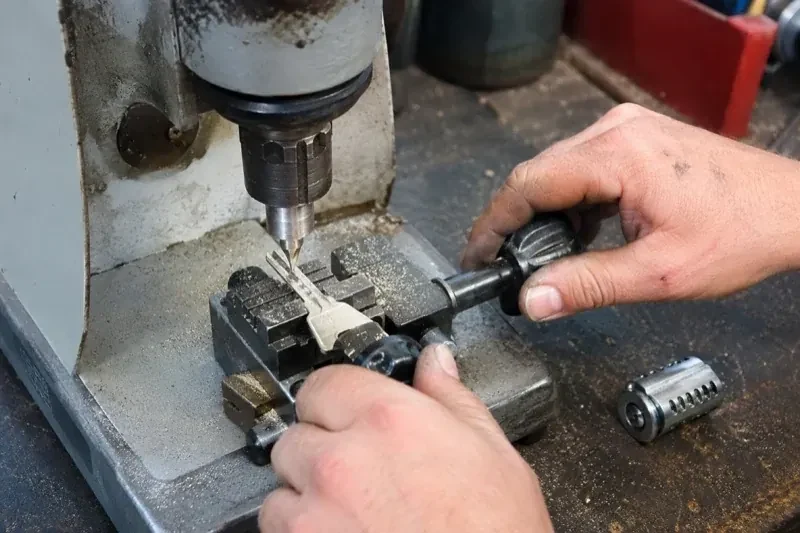
Vehicles equipped with a coded mechanical key leave the factory with a key code that describes the exact depths of its blade. When that code can be retrieved for your VIN, the locksmith enters it into a code-cutting machine, which mills a blank to the original specification rather than tracing a worn key. The result is a blade that matches the locks as they were built, seats fully in the ignition and lifts each wafer to the correct height. Cutting to code is the preferred route for any replacement, and it is the only sensible route when the existing key has worn thin or been copied several times over.
Scene 3
The visit closes with your documents back in your hands and a copy of the authorization record kept by the locksmith, which is the industry's way of tying every key made to a named owner and a VIN. It is a good moment to check that the vehicle permit is current and in your name, especially after a private purchase, since the ownership transfer is what makes future key service straightforward. Keep the permit in your wallet or with your licence rather than in the glovebox next to a spare key, so a break-in gives nobody both the car's identity and a way to drive it.
What shapes the quoteHumberlea Lock Experts
FeesSame any hour
Because a car key is a credential, and issuing one to the wrong person would be a serious matter for the real owner. Matching photo identification and the vehicle permit to the VIN on the dash is the standard step, and it takes a minute. It protects you too: the same check stands between your car and anyone who might one day claim it as theirs.
A few. Some manufacturers lock key programming behind data or tooling that only their dealer network can run, particularly on the newest models and on certain all-keys-lost situations. The locksmith checks your VIN against what the equipment supports before the visit and tells you plainly if the dealer route applies. Even then, the locksmith can often cut the emergency blade, open the car and handle the mechanical side so the dealer step is a small one.
It depends on the starting point. Adding a spare to a car with a working key is often the shortest kind of visit. An all-keys-lost job on a newer vehicle takes longer, because the car has to be opened, the lock decoded, the immobilizer reset and any security timer waited out. Milling a high-security blade and pairing a proximity fob add their own steps. The locksmith gives you a realistic window once the VIN and the situation are known.
TorontoOntario
Car Key Replacement · Fairhaven, Humberlea, Kingsview Village, Martin Grove Gardens, Pine Point, Princess Anne Manor, Richview Gardens, St. Phillips, Westmount, Weston
Every square is one home in a hundred.
On-site assessment
The fob went through the washing machine in a jacket pocket.
(289) 804-5807, open 24/7.
On-site assessment preferred · (289) 804-5807, open 24/7