Skip to content
HumberleaLock ExpertsOpen 24/7 (289) 804-5807
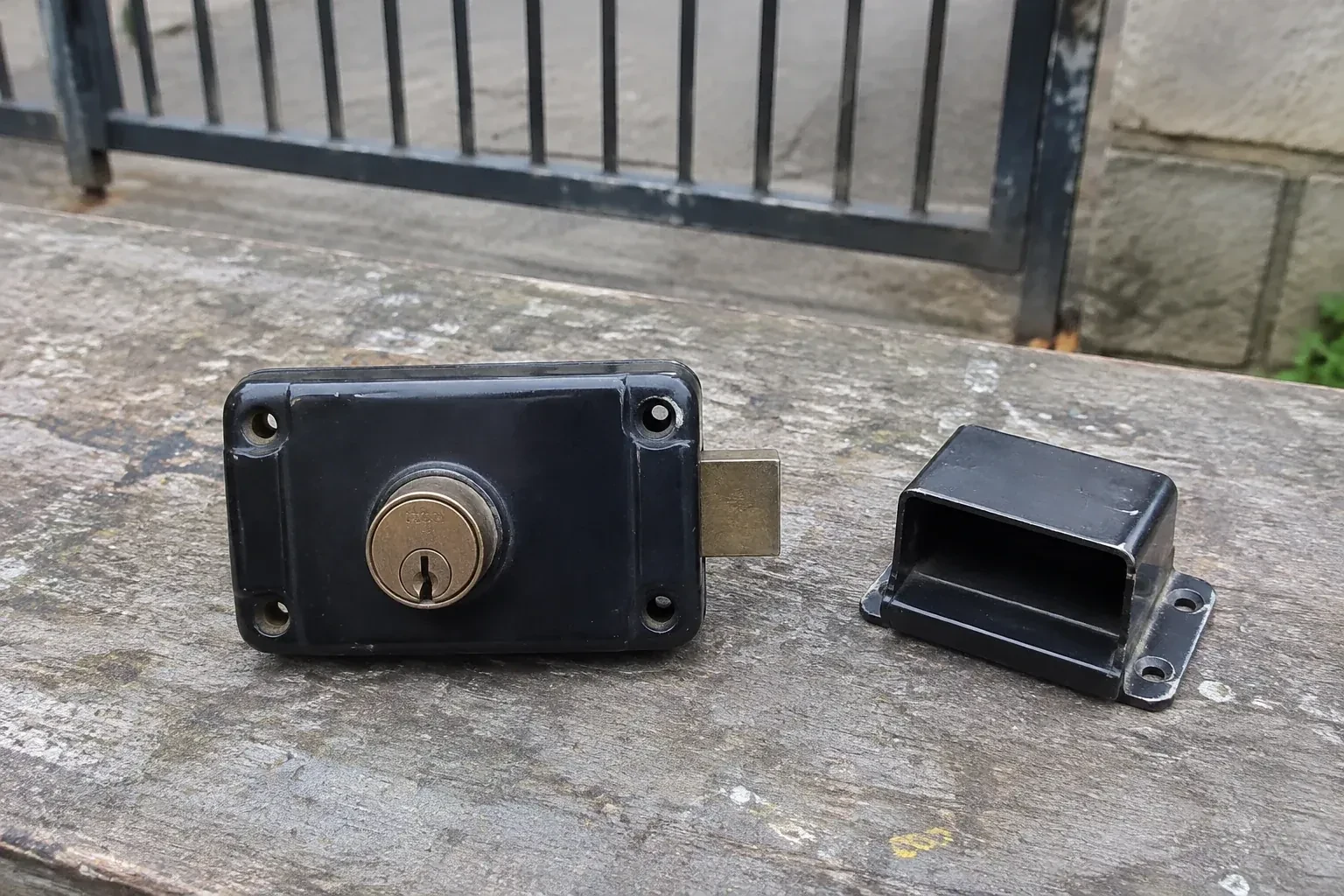
Detached rim gate lock and separate box keeper on an outdoor workbench. — Gate & Building Entry Locks, Toronto

Change or rekey · Toronto

Gate & Building Entry Locks

Someone pried at the gate latch overnight, and now the strike plate hangs by one screw and the cylinder spins loose in its housing. The gate still closes, technically, but a firm shoulder is all it would take to open it from outside.

In plain words

Hardware bolted to a gate or an exterior building door lives outside every day of the year, which is a different job from a lock tucked behind a storm door. This service treats that exposure as the starting point: cylinders rated for weather, fasteners that resist road salt, and a closer set up to keep working through a freeze-thaw cycle rather than seizing at the first cold snap. The result is a gate or entry that keeps operating through the season it is most likely to struggle in.

Sound familiar?Toronto

The call
Every time the courtyard gate closes, it slams hard enough to rattle the fence panels, and the deadlatch never quite drops into the keeper before the spring yanks it the rest of the way. One good gust of wind and it bounces right back open.
NextHow the visit goes

Gate & Building Entry Locks · Toronto

How the visit goes

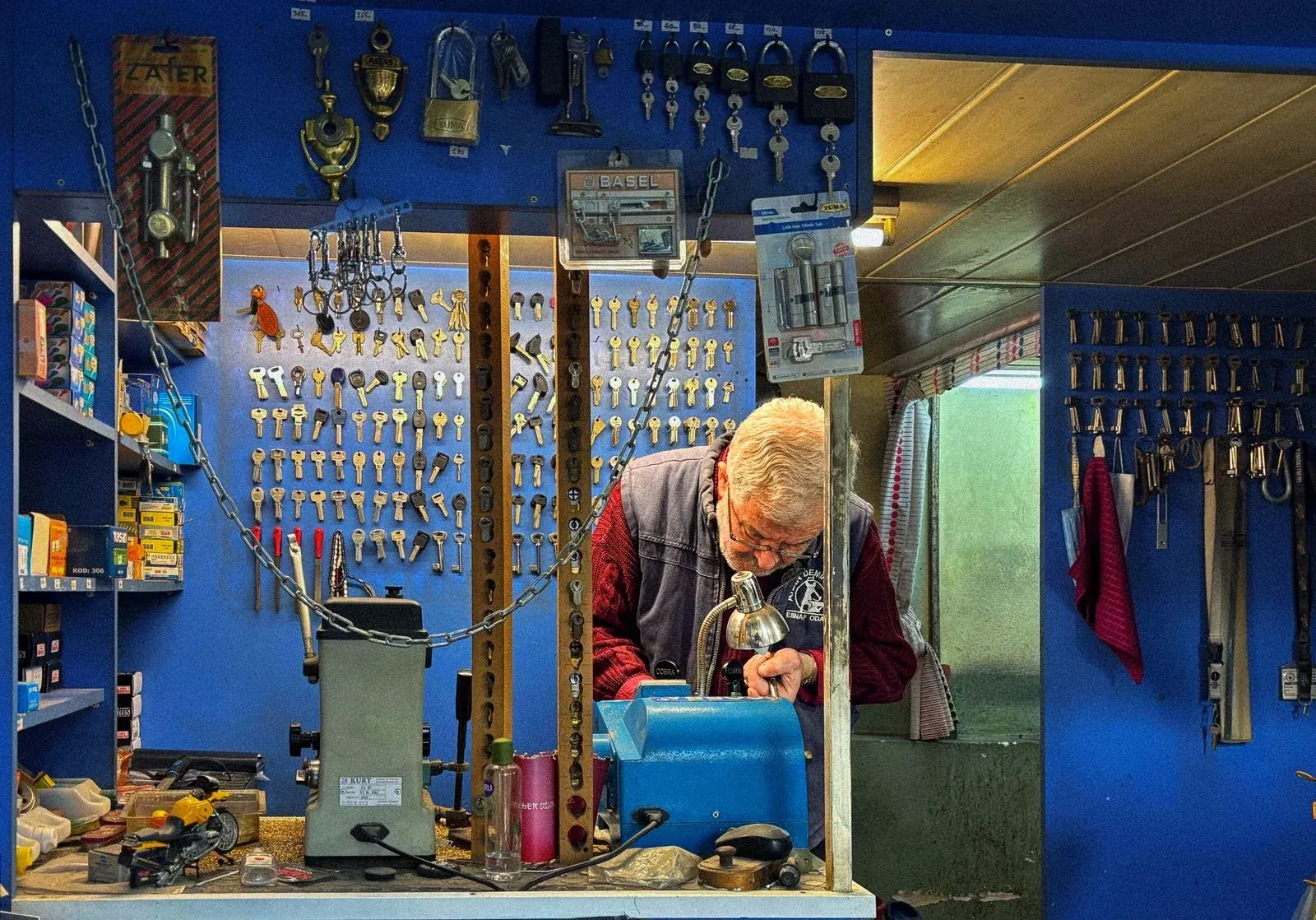
Person leaning over a blue bench machine in a small shop with keys, padlocks and door hardware displayed on blue walls.
  1. Scene 1

    Identifying the hardware family

    Every lock on a gate or shared entry belongs to a family with its own habits: a surface-mounted gate lock, a mortise case built into a heavier door, a rim cylinder feeding an electric strike, or a panic device on a fire exit. The maker's mark, the keyway shape and whether a thumb-turn or a second keyed side is present all point to which family sits on the door. Getting this right before opening anything up is what lets the visit move straight to adjustment or replacement instead of guessing at parts that will not fit the housing already there.

  2. Scene 2

    Correcting a frost-heaved or leaning post

    When ground movement is the real cause, the fix goes to the post rather than the lock. Depending on what the post is set in, this can mean resetting it plumb, packing or replacing the base it sits in, or adding bracing so it stops drifting with each freeze-thaw cycle. The strike is then repositioned to match the corrected post, and the gate is cycled through several full closes to confirm the latch now meets it consistently, in place of chasing the same misalignment again after the next frost.

  3. Scene 3

    A post and frame that hold their position

    Where ground movement had thrown the gate out of line, you leave with a post that has been reset, packed or braced so it stays where it was put, not just a strike that was shimmed to match wherever the post happened to be that day. The gate should now close consistently through the seasons rather than needing a fresh adjustment every time the ground shifts. Check it again after the next hard frost or a wet spring, since soil movement is ongoing rather than a one-time event.

In the van

  • Hinges, pivots and shims
  • Plug follower and repinning kit
  • Weather-rated cylinders
  • Keyed-alike cylinders
  • Corrosion-resistant fasteners

What shapes the quoteHumberlea Lock Experts

Type and grade of the gate or door lock
A basic surface-mounted gate latch, a weather-rated cylinder, a mortise case and a panic device on a building entry each take different parts and different amounts of time to service, and that difference is reflected in the quote.
Electronic components on the entry
A buzzer, keypad, electric strike or maglock adds its own diagnostic and testing time beyond the mechanical lock itself, and any electronic part that needs repair or replacement is priced as its own line.
How many current key holders need new keys
Keys cut on site are counted individually into the quote. A single household needs far fewer than a multi-unit building entry where every current resident is being issued a fresh key at once.

FeesSame any hour

Have it ready

Before you call · 0 / 3

(289) 804-5807

Things people wonder about

Should every gate on my property share one key, or is it better to keep them separate?

Either can make sense, and the choice usually comes down to who uses which gate and how often. A household that walks through the front and side gates daily generally prefers one key for both, while a gate that only a landscaper or utility worker uses is sometimes kept on its own key deliberately, so lending it out does not hand over access to everything else. The locksmith can lay out both options once every gate on the property has been looked at.

How should I look after a gate lock so it keeps working?

Twice a year, work the lubricant the cylinder maker specifies into the keyway and cycle the key a few times; the wrong product for that model can collect grit or gum up the mechanism instead of helping it. Check that the closer still settles the gate into the latch without slamming, and look at hinges or post hardware for movement, especially after a hard winter. A cylinder that starts needing a wiggle, or a gate that has begun to drag, is worth addressing while it is still a small adjustment.

How long does a gate or building entry lock visit usually take?

It depends on what the assessment finds once the locksmith is looking at the actual hardware. A single gate lock that only needs adjusting or rekeying is a shorter visit than one where the closer, hinges and post all need attention, or where several gates on a property are being brought onto one key. Electronic hardware such as a buzzer or electric strike adds its own testing time. The locksmith can give a closer sense of the scope once the gate or door has been examined in person.

Torontoinformation

TorontoOntario

Town
Toronto
In business
13 years
Hours
Open 24/7
Nights, weekends and holidays, same fees
Visits
On-site assessment preferred. Request a visit or call.

2021 census: what it means at the door

Every square is one home in a hundred.

  • 58 in 100 homes · older homes
  • About 58% of homes in Toronto were built in 1980 or earlier, according to the 2021 Census.Where most homes were built decades ago, doors often still carry their original mortise locks and brass knobs. That hardware can usually be cleaned, re-sprung and kept in service, with a modern deadbolt added above it for strength without losing the look.
  • Single-detached houses make up about 23% of homes in Toronto (2021 Census).In a building, a lockout happens in a hallway rather than a porch, and the neighbours notice. A locksmith confirms you belong to the suite, opens the door with the least fuss the lock allows, and leaves the door and cylinder intact for the night.

Source: Statistics Canada, Census Profile

Open Toronto in Google Maps

On-site assessment

Request a visit.

Someone pried at the gate latch overnight, and now the strike plate hangs by one screw and the cylinder spins loose in its housing.

(289) 804-5807, open 24/7.