Skip to content
HumberleaLock ExpertsOpen 24/7 (289) 804-5807
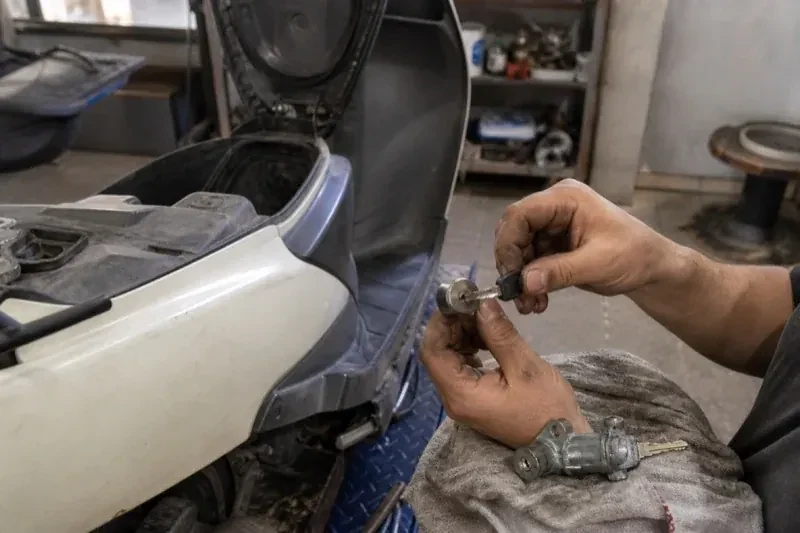
Hands holding a key and removed lock cylinder beside a scooter with its seat raised, with another lock assembly on a cloth. — Motorcycle & Scooter Keys, Toronto

Car keys · Toronto

Motorcycle & Scooter Keys

A copy cut at a hardware kiosk turns the ignition on some mornings and skips it on others, occasionally sticking halfway and needing a wiggle that the original key never required.

In plain words

A machine bought without a full history often arrives with one worn key and no idea what, if anything, opens the seat or the fuel cap. Key service in that situation starts by identifying every lock on the machine and testing whichever key came with it against each one, then decoding or cutting whatever the existing key does not already cover. The result is a full, known set of keys for the machine rather than a single blade of uncertain origin.

Sound familiar?Toronto

The call
You dig through every jacket pocket and the tank bag twice, but the ignition key that always sits on the same ring is nowhere to be found. The bike sits exactly where you parked it, and nothing in reach will turn that lock.
NextHow the visit goes

Motorcycle & Scooter Keys · Toronto

How the visit goes

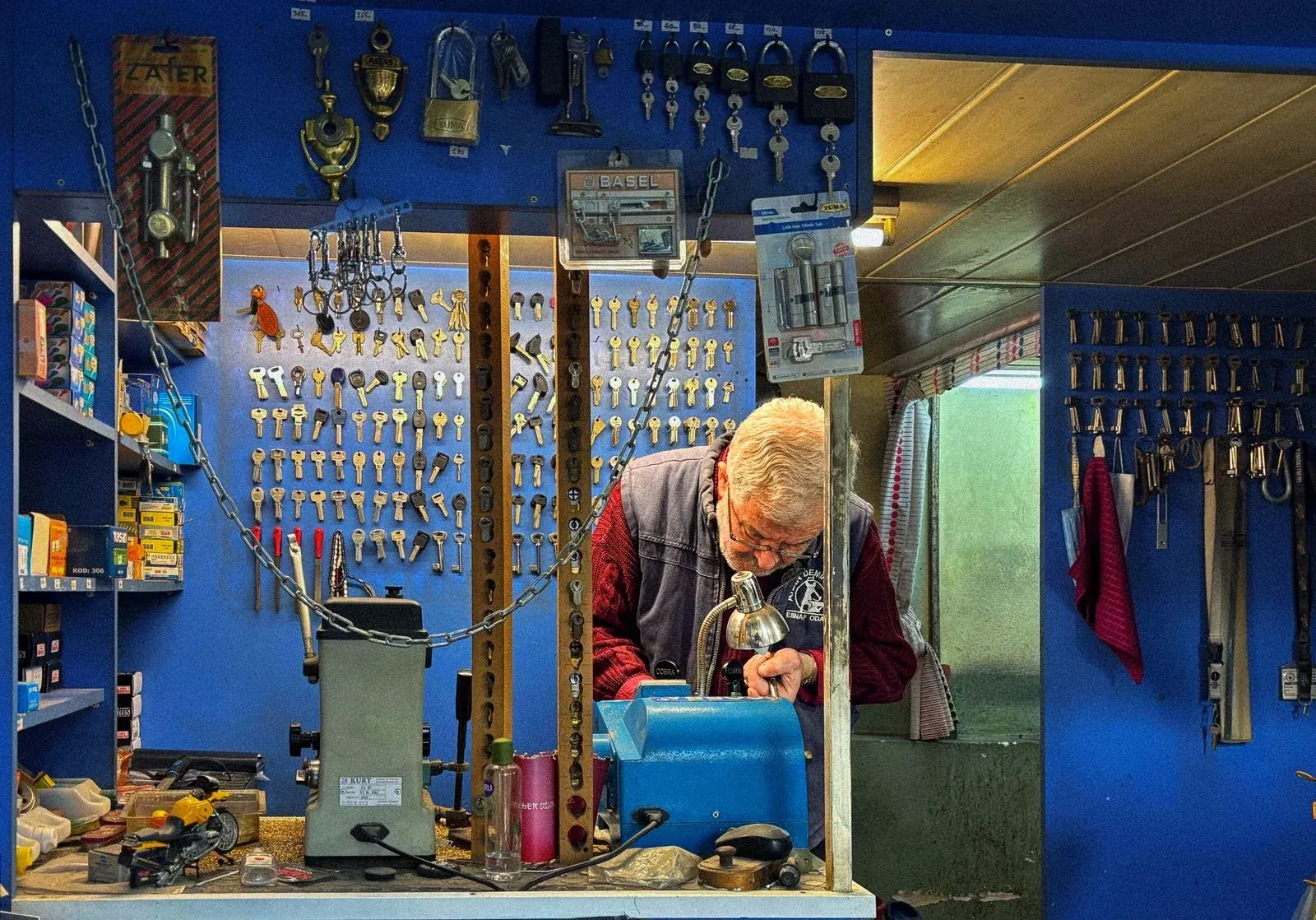
Person leaning over a blue bench machine in a small shop with keys, padlocks and door hardware displayed on blue walls.
  1. Scene 1

    Confirming who is asking

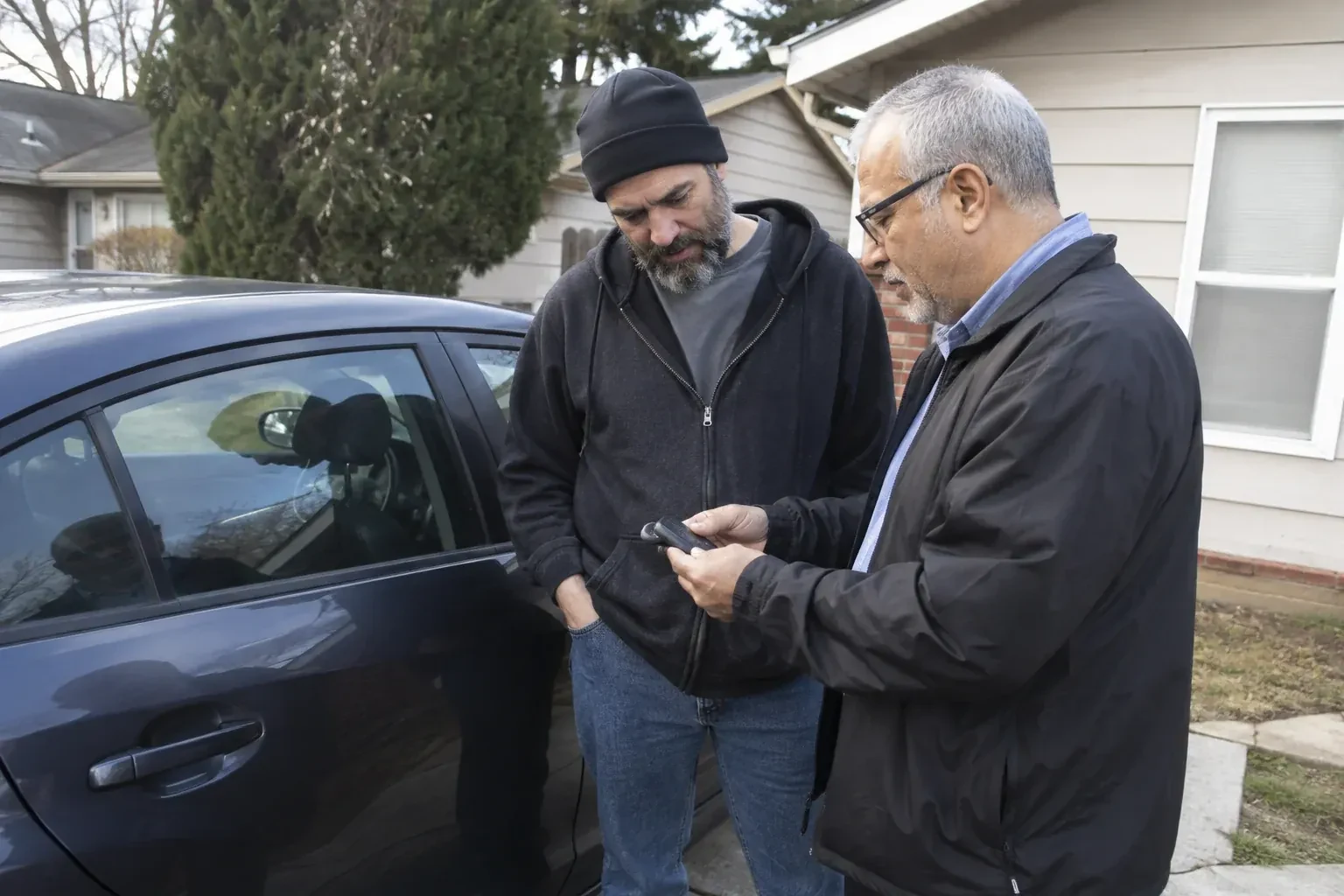
    Before any lock is touched, the locksmith confirms that the person requesting a key has a real connection to the machine: vehicle registration, an insurance document that matches the plate, or a bill of sale for a recent purchase all work. Where paperwork is not on hand, a dealership record, a family member who can vouch for the owner, or a photo of the machine alongside identification often fills the gap. This step takes only a few minutes and stands ahead of any cutting, decoding or programming, since a working key is something that should only ever go to the person meant to hold one.

  2. Scene 2

    Cleaning and servicing a corroded lock

    A lock gummed up by road grit or old grease is stripped down, its wafers and springs cleaned individually, and the keyway itself cleared of anything trapped against the wafers. Corrosion on a wafer's edge is worked off carefully rather than scraped away roughly, since removing metal changes the depth the key needs to lift it to. Once the mechanism moves freely again, it is dressed with whatever lubricant its own maker specifies, reassembled, and tested with the customer's key before the locksmith considers the lock itself resolved rather than simply hidden under a new cut.

  3. Scene 3

    Looking after a wafer lock

    A wafer lock rewards a little occasional attention. Cleaning matters more than lubricant for a wafer lock like this; where the maker calls for it, a puff of the specified lubricant into the keyway once or twice a year keeps the wafers moving freely. Wiping the key itself clean before use, especially after a wet ride, keeps grime from being carried into the lock on every insertion. These are small habits, but they are the difference between a lock that turns the same way for years and one that slowly stiffens.

In the van

  • Code-cutting machine
  • Manufacturer-approved lock cleaner or lubricant
  • Fob shells and batteries
  • Contact cleaner
  • Replacement ignition or steering lock

What shapes the quoteHumberlea Lock Experts

Sourcing an uncommon key blank
Some keyway profiles are harder to source a matching blank for than others, particularly on older or less common machines, and locating the right blank can add to the time before cutting even starts.
Condition of the steering lock
A steering lock that turns freely adds little to the visit. One that has seized from weather or disuse needs patient freeing before any key can be tested against it, which takes extra time.
Bringing multiple locks onto one key
Bringing the seat, fuel cap or a storage lock onto the ignition's key is extra work per lock rekeyed, separate from cutting the key itself, and is priced as its own line.

FeesSame any hour

Have it ready

Before you call · 0 / 3

(289) 804-5807

Things people wonder about

Do you need the vehicle's VIN to make a key?

It helps but is not always required. The VIN can confirm the exact model and sometimes points to a factory key code on file, which speeds up cutting a key without reading the lock from scratch. Where the VIN is not available or does not lead anywhere useful, the locksmith works directly from the lock or an existing key instead, so a missing VIN slows the process rather than stopping it.

Do I have to have the original key for you to cut a new one?

No. When every key for the machine is gone, the locksmith reads the lock directly, working out each wafer's depth by picking and reading the cylinder or using a decoder built for that keyway, and cuts a fresh key to the code that comes out of that reading. It takes longer than copying an existing key, since every wafer is read individually, but it produces a key that matches the lock rather than a guess.

Would a copy from a general hardware-store machine work just as well?

It can, but motorcycle wafer locks vary between manufacturers even when they look similar, and a generic cutter is not always set up to read the specific depths and keyway profile correctly. A copy that is slightly off shows up as a key that catches or needs a wiggle, which is often what brings someone in after trying that route first. Cutting from the lock's actual code avoids that guesswork.

Torontoinformation

TorontoOntario

Town
Toronto
In business
13 years
Hours
Open 24/7
Nights, weekends and holidays, same fees
Visits
On-site assessment preferred. Request a visit or call.

2021 census: what it means at the door

Every square is one home in a hundred.

  • 58 in 100 homes · older homes
  • About 58% of homes in Toronto were built in 1980 or earlier, according to the 2021 Census.Where most homes were built decades ago, doors often still carry their original mortise locks and brass knobs. That hardware can usually be cleaned, re-sprung and kept in service, with a modern deadbolt added above it for strength without losing the look.
  • Single-detached houses make up about 23% of homes in Toronto (2021 Census).In a building, a lockout happens in a hallway rather than a porch, and the neighbours notice. A locksmith confirms you belong to the suite, opens the door with the least fuss the lock allows, and leaves the door and cylinder intact for the night.

Source: Statistics Canada, Census Profile

Open Toronto in Google Maps

On-site assessment

Request a visit.

A copy cut at a hardware kiosk turns the ignition on some mornings and skips it on others, occasionally sticking halfway and needing a wiggle that the original key never required.

(289) 804-5807, open 24/7.