Skip to content
HumberleaLock ExpertsOpen 24/7 (289) 804-5807
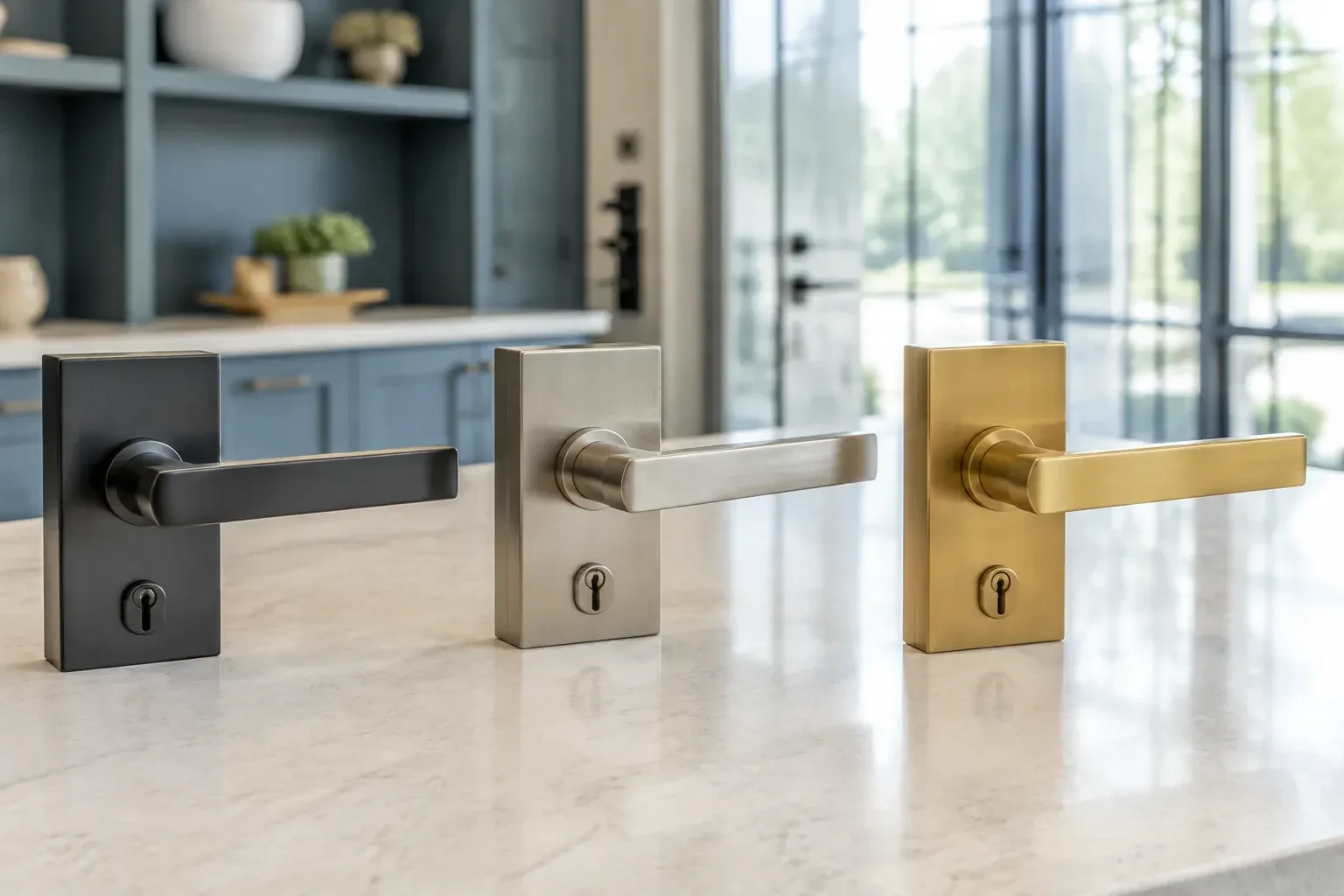
Three rectangular door-handle sets with keyholes in black, silver-colored and gold-colored finishes standing on a countertop. — Commercial Rekeying, St. Phillips

Commercial · St. Phillips

Commercial Rekeying

The office has been reshuffled twice since the locks were last touched. Reception can open the server room, the warehouse crew has a key to accounting, and the chart that once explained who could open what has not been seen since the move.

In plain words

Rekeying is also a chance to decide how the keys should work, not simply to change them. Most businesses settle on a small number of key groups: one key for the doors every employee uses, another for the office, cash room or server closet that only managers open, and perhaps a single master for the owner that opens everything. The locksmith maps this out on a keying chart before touching a cylinder, then pins each lock so the plan holds true on the door. Staff carry one key instead of a ring, managers carry two, and the chart tells you at a glance who can open what.

Sound familiar?St. Phillips

The call
A break-in overnight took the cash float and a staff member's bag with her work keys inside it. The glass is being replaced this morning, but the key that opened the door yesterday will still open it tonight unless the cylinders are changed.
NextHow the visit goes

Commercial Rekeying · St. Phillips

How the visit goes

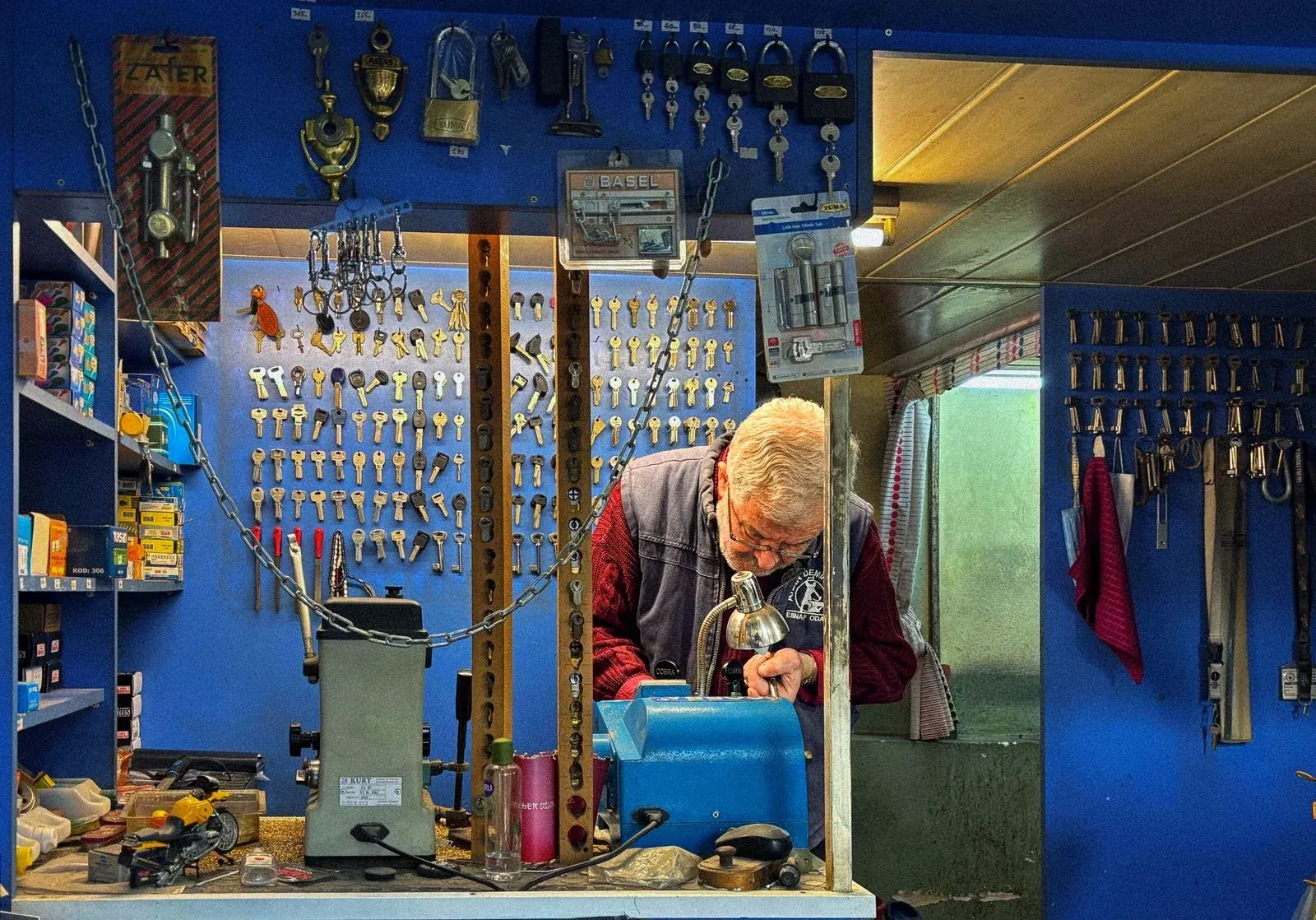
Person leaning over a blue bench machine in a small shop with keys, padlocks and door hardware displayed on blue walls. — St. Phillips
  1. Scene 1

    Who is entitled to order the change

    Every commercial rekey starts by confirming that the person asking for it has the standing to do so. For a small business that is usually the owner or a director; for a larger one, a facilities manager or property manager acting under written authority. The lease matters here too, because it decides which doors are the tenant's to alter and which remain the landlord's, and many leases ask that the landlord be given a key or told when locks change. Getting this straight before any cylinder comes out protects the business, its neighbours in the building and the locksmith, and it means the finished keying chart lands in the right hands.

  2. Scene 2

    Retiring the old keys

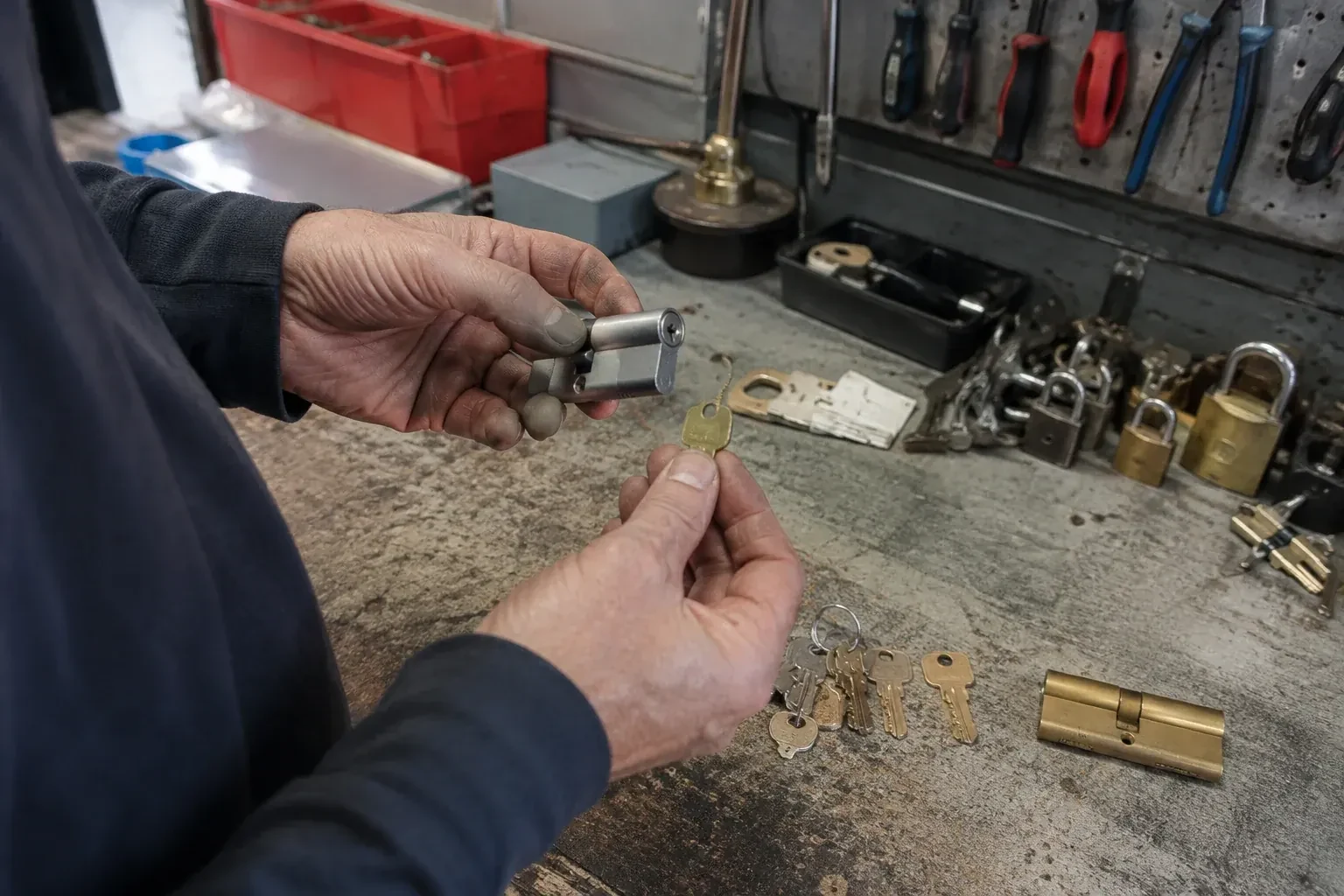
    The job is finished when the old keys are proven dead, not when the new ones work. At every rekeyed opening the locksmith tries a sample of the old keys, including the master if one existed, and confirms that each one enters the keyway and turns nothing. The collected old keys are then cut through with snips in front of the manager and can be handed back as scrap or taken away. Any door deliberately left on its original key is written on the chart in plain words so nobody assumes it changed. That last check is what turns a day of brass work into a genuine reset of who can open the business.

  3. Scene 3

    Storefront hardware ready for the salt

    Cylinders on a street-facing door live a hard life: slush, salt spray from the sidewalk plough and a dozen freeze-thaw swings a winter. Each cylinder handled during the rekey is cleaned and dressed with the lubricant approved for that model, a dry graphite, PTFE or specified liquid lubricant applied sparingly, since too much graphite can gum a cylinder just as oil traps grit. Keep it that way with a puff of the same lubricant each autumn and a wipe of the key before it goes in on a slushy morning. A set screw snugged, a cam aligned and a bolt that throws fully are part of the handover, so the rekeyed door also locks more cleanly than it did before.

In the van

  • Interchangeable cores and control key
  • Mortise cylinder set screws and cams
  • Plug follower
  • Code key machine
  • Key gauge and decoder

What shapes the quoteHumberlea Lock Experts

Landlord and base-building coordination
Suite doors that must accept both your key and the landlord's master, or work that needs the property manager on site, add coordination the quote allows for.
Upgrades chosen on the day
Some businesses use the visit to move to interchangeable cores, add a lockbox for the alarm company or fit a heavier cylinder on the cash room. Each is a separate line you can accept or leave.
Several locations
Rekeying two or three sites onto one keying plan means travel between them and a chart that spans buildings, quoted per site plus the shared design work.

FeesSame any hour

Have it ready

Before you call · 0 / 3

(289) 804-5807

Things people wonder about

What is the difference between rekeying a business and replacing its locks?

Rekeying keeps every lock on the door and changes only the pins inside the cylinder, so a new key works and the old ones stop. Replacing swaps the hardware itself. Commercial cylinders are made to be repinned many times, so rekeying suits any lock in sound condition and leaves the levers, trim and door untouched. Replacement is chosen door by door for cylinders that are worn, corroded or too light for what they protect.

What is an interchangeable core and why is it suggested for staff turnover?

A small-format interchangeable core is a small figure-eight cylinder that slides out of the lever, deadbolt or padlock when a control key is turned, with no tools needed; larger doors sometimes use a large-format core with a different profile instead. A manager keeps the control key in the safe and a few spare cores on hand, so a missing key means the core is swapped in moments and repinned later. For a business with frequent staff turnover, it turns a call-out into a routine.

Does stamping keys 'do not duplicate' stop people copying them?

Not reliably. The stamp is a request, and any key on a standard blank can be copied by anyone with the blank and a machine. What does work is controlling the blank itself through a restricted keyway, or controlling access to the lock through interchangeable cores and a tight register. Stamping still has a place: a serial code on each key, instead of the business name, lets you track it without telling a finder where it fits.

St. Phillipsinformation

TorontoOntario

Town
St. Phillips, Toronto
In business
13 years
Hours
Open 24/7
Nights, weekends and holidays, same fees
Visits
On-site assessment preferred. Request a visit or call.

2021 census: what it means at the door

Every square is one home in a hundred.

  • 58 in 100 homes · older homes
  • About 58% of homes in Toronto were built in 1980 or earlier, according to the 2021 Census.Period hardware on older homes deserves matching parts, not a mismatched modern set. A locksmith who works among such houses keeps finishes and styles that suit them, so a repaired or replaced lock still looks like it belongs to the door.
  • Single-detached houses make up about 23% of homes in Toronto (2021 Census).Townhouses share walls but usually have their own front door and often a back door or garage. Keying both alike, and checking the strike on the less-used door, is the everyday work in a neighbourhood of attached homes.

Source: Statistics Canada, Census Profile

Open St. Phillips in Google Maps

On-site assessment

Request a visit.

The office has been reshuffled twice since the locks were last touched.

(289) 804-5807, open 24/7.