Sound familiar?Weston
- The call
- They did not get in. The attempt left a screwdriver gouge in the door edge, a strike plate bent outward and a deadbolt that now needs a shove to throw. The lock held, but the door is telling you it was tested.
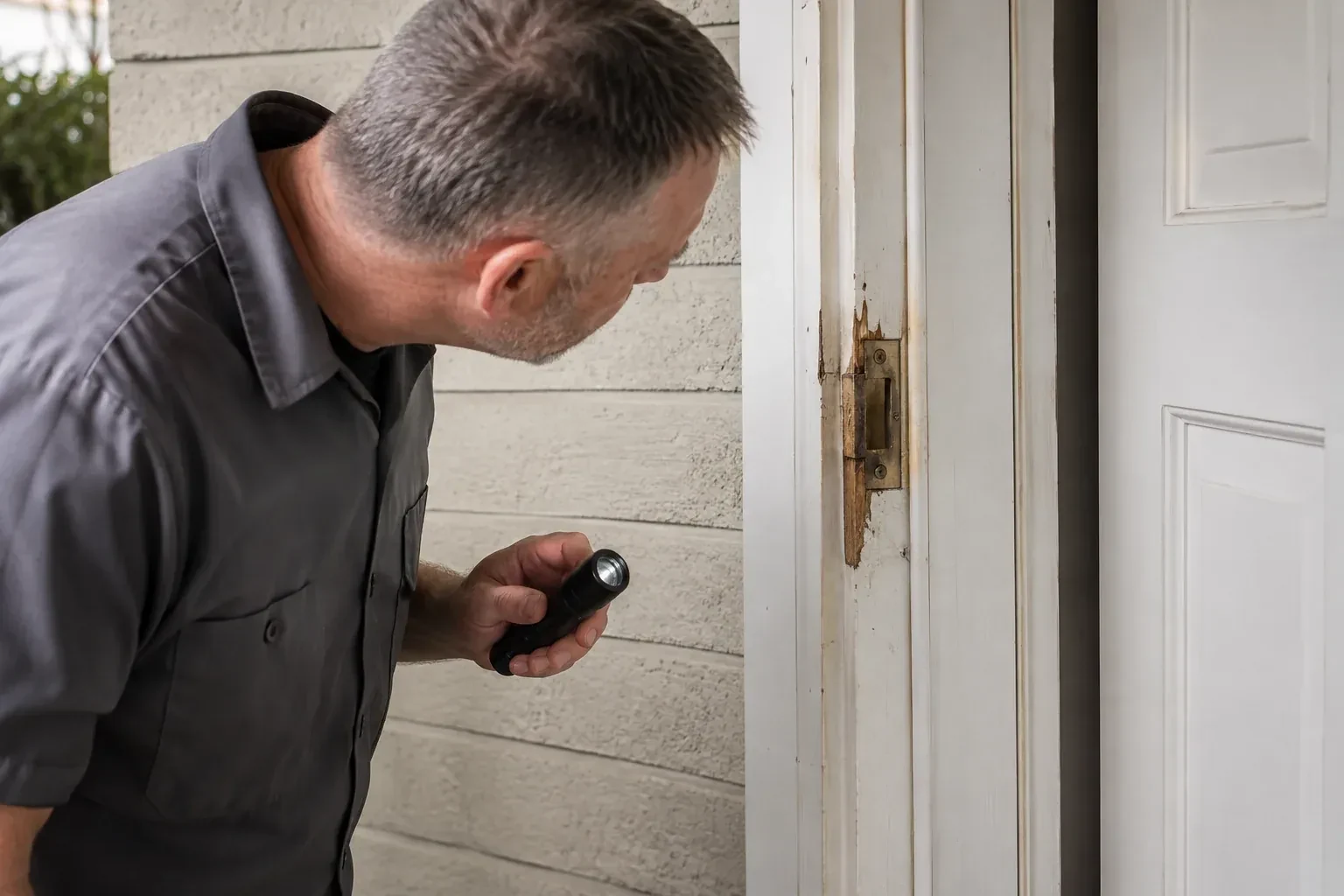
They did not get in. The attempt left a screwdriver gouge in the door edge, a strike plate bent outward and a deadbolt that now needs a shove to throw.
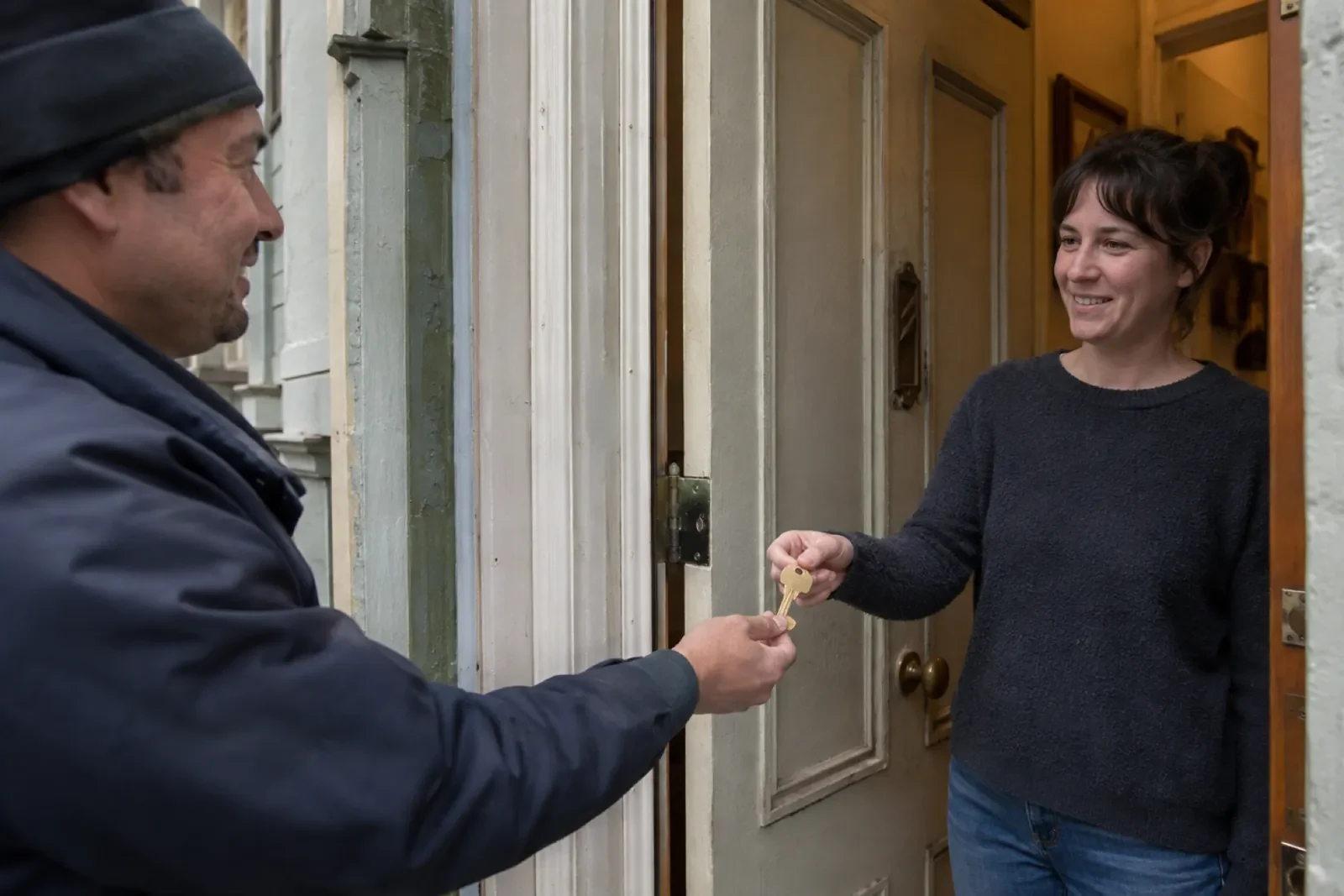
When a home is broken into, the locks are not the only thing that has changed hands. Keys hanging in the hall, a spare in a drawer, a garage remote on a visor or a house key on a stolen car's ring may all be gone. Part of break-in damage repair is closing that door too. Every cylinder those keys fit is rekeyed or replaced and fresh keys are cut, the mailbox and padlocks are considered, and you are reminded to reset the garage opener and any alarm codes that were written down. The forced door gets fixed, and the missing keys stop mattering at the same time.
Sound familiar?Weston
Break-In Damage Lock Repair · Weston
Scene 1
Three components can fail in a forced entry and they are repaired differently, so the locksmith sorts them out before quoting. Lock failure is a broken cylinder, bolt or latch and is answered with hardware. Frame failure is a torn strike or split jamb and is answered with a boxed strike, repair plates, long screws and sometimes new wood. Door failure is a crushed edge, a split around the bore or a bent hinge leaf and is answered with edge reinforcement or, when the slab itself is broken, a door installer. Naming which of the three happened, and often all three, shows you what the locksmith completes tonight and what is handed to another trade.
Scene 2
Aluminum storefront doors fail differently: the narrow stile bends under a pry bar, the hookbolt or deadlatch is forced, or the glass is broken. The locksmith straightens or replaces the stile section where possible, fits a new narrow-stile deadbolt or hookbolt with a matching strike, and adds a latch guard plate or an anti-pry astragal along the meeting edge so a bar has nothing to grip. Interchangeable cores are rekeyed and access codes reviewed with the owner. Where the door is part of an exit route, the inside hardware is kept as a single-motion release so the repair strengthens the entrance without changing how people leave.
Scene 3
The visit ends with the door tested the way it will be used. The bolt is thrown and withdrawn with the door open, then closed, and it must slide home without dragging on the strike or stopping short of full extension. The latch catches when the door is pushed to, not slammed. The door meets its weatherstrip evenly and the thumb-turn works from inside without a key. You try it yourself before the locksmith packs up, with your own new key, so the first time the household locks up that night is not the first time anyone has tried the door.
What shapes the quoteHumberlea Lock Experts
FeesSame any hour
Everything those keys fit. That usually means the front, back and side doors, the garage man-door, the mailbox and any padlocks, and in a rental the suite door with the landlord's involvement. Rekeying changes a serviceable cylinder to answer to a new key, and a cylinder that cannot be rekeyed is replaced instead. Doing every affected opening in one visit, keyed alike where the cylinders are compatible, means no forgotten door still answers to the stolen ring.
Yes, in a good way. A suite door that opens onto a corridor is meant to close and latch on its own every time, so the repair uses hardware suited to a labelled fire door, keeps the self-closing device adjusted and operating, and adds no holes or plates the label does not allow. The building's manager is normally involved, and the locksmith works with the door's rating rather than around it.
Yes, unless the insurer has already said they are not needed. Insurers generally ask policyholders to retain damaged property until the claim is settled, and a bag holding the twisted cylinder, torn strike and split wood answers an adjuster's questions more clearly than any description. The locksmith hands them over at the end of the visit along with a written note of what was replaced. Photographs of the parts in place, before removal, complete the record.
TorontoOntario
Break-In Damage Lock Repair · Toronto, Fairhaven, Humberlea, Kingsview Village, Martin Grove Gardens, Pine Point, Princess Anne Manor, Richview Gardens, St. Phillips, Westmount
Every square is one home in a hundred.
On-site assessment preferred · (289) 804-5807, open 24/7