Sound familiar?Pine Point
- The call
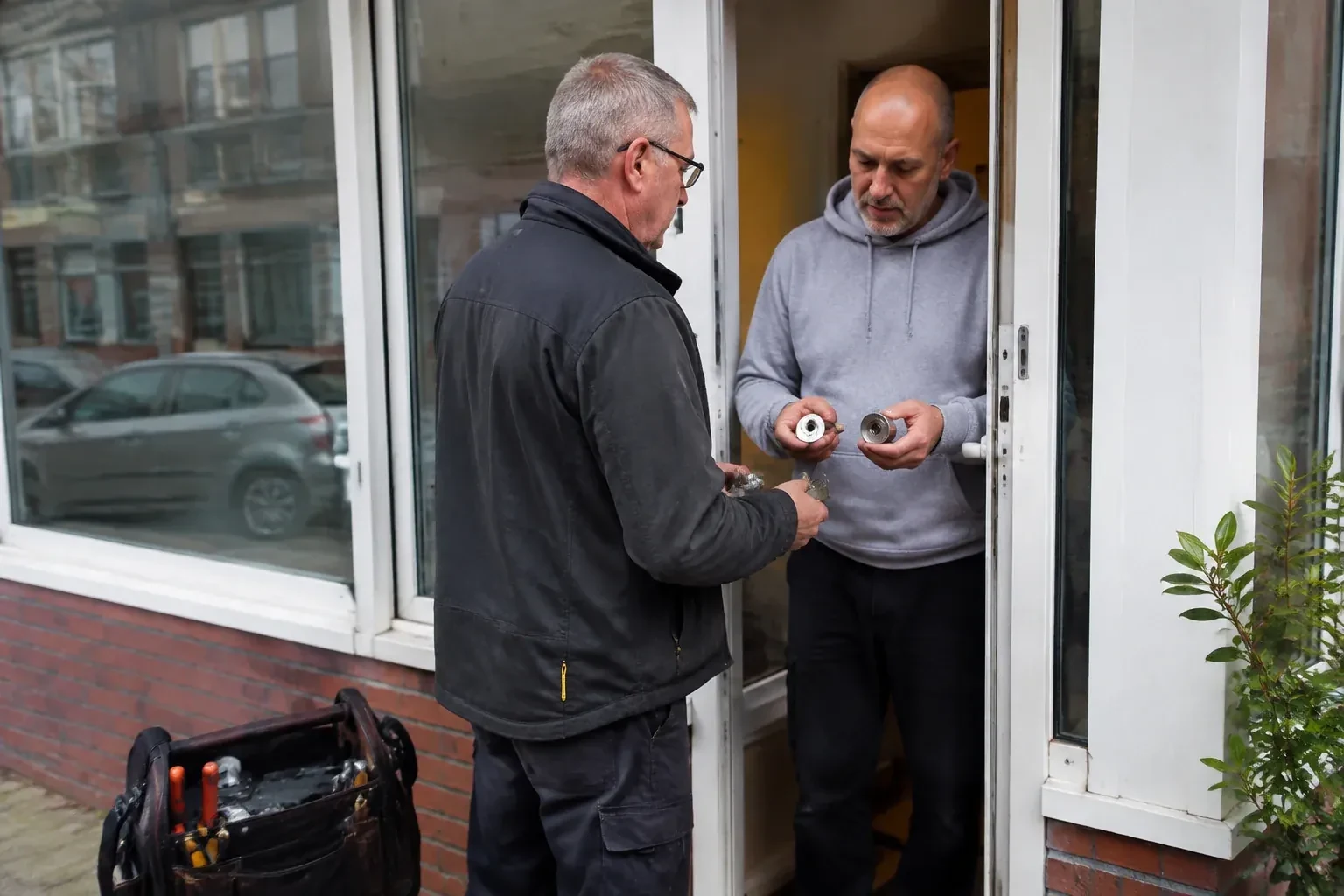
- After a week of humid weather the back door has swollen in its frame. The key turns, you can feel the bolt trying to move, but it is jammed hard against the strike plate and the door refuses to open.
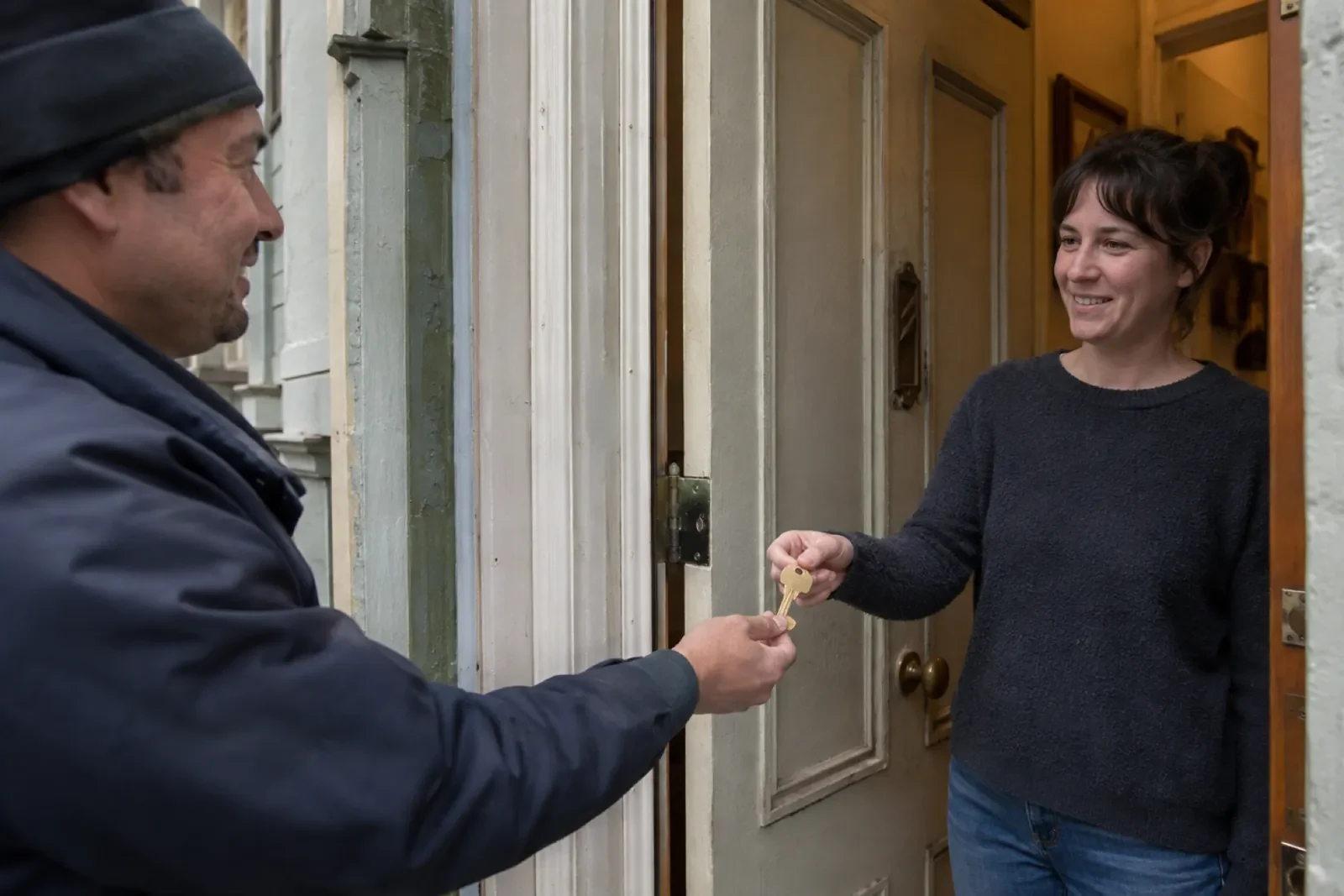
It is minus fifteen, the wind is coming across the driveway, and the key will only go halfway into the deadbolt. Yesterday's thaw left water in the keyway and overnight it froze solid.
Most lockouts end with the original lock still on the door and still working. That is the point of professional entry: picks, tension tools, decoders and latch tools are designed to operate the mechanism the way a key would, without cutting or prying anything. Drilling is reserved for cylinders that will not yield, and when it is the only route the locksmith says so before starting and fits a replacement cylinder in the same visit so you are never left with a hole where a lock used to be. You keep your hardware, your finish and your existing keys whenever the situation allows.
Sound familiar?Pine Point
Home Lockout Service · Pine Point
Scene 1
In winter the assessment starts with the weather. A keyway that took on meltwater during a thaw can be frozen solid by morning, and salt spray from a nearby driveway leaves a crust that gums up the pins. The locksmith looks for frost around the cylinder face, tests how far the key seats, and feels whether the plug is stiff from cold grease or genuinely iced. This decides between a gentle thaw with lock de-icer, warming the cylinder, or picking once the ice releases. It also flags hardware that should get a dry lubricant and a weather cover afterwards so the same morning does not repeat next week.
Scene 2
The opening follows a ladder. At the bottom rung are methods that operate the lock exactly as a key would: single-pin picking, raking or decoding the cylinder so the plug turns and the bolt withdraws. Next come bypasses that work around the cylinder, slipping a spring latch or reaching the inside thumb-turn with a purpose-made tool. Only when the hardware defeats all of those does drilling come into the conversation, and it is a conversation, not a surprise. Working up this ladder means the lock is intact in the great majority of cases and you close the door behind the locksmith with the same hardware you had that morning.
Scene 3
Most people leave a lockout with a resolution never to repeat it, and a few habits make that real. A spare key with a trusted neighbour or nearby relative is the classic answer. A small combination lockbox fixed somewhere discreet, with the code shared only with people you trust, is a step up and avoids the flowerpot and the door frame, which are the first places anyone looks. Households with keypad or smart locks can add a family member's code so a lost key is an inconvenience rather than an evening on the porch. The locksmith can fit a lockbox or program a code while still on site if you ask.
What shapes the quoteHumberlea Lock Experts
FeesSame any hour
It starts the same way and adds one step. The broken blade is removed with extraction tools that grip it and draw it out, rather than pushing it deeper, and then the door is opened normally. A key rarely breaks in a healthy cylinder, so the locksmith checks the pins and springs afterwards and cleans or services the cylinder if wear caused it. A new key is cut from the two halves or from the code, since a weakened copy would snap again.
Yes. The same skills apply to any residential lock: a storm door that self-latched on the porch, the man-door into the garage, a shed, a gate with a padlock or a keyed latch, and a mailbox or storage locker in a condo building. Tell the locksmith about every opening involved so the right tools are in the van. Several small locks opened in one visit is common, especially after a move when keys were never handed over.
By all means check the easy things: another door, a family member with a spare, a neighbour holding a key. Beyond that, it pays to wait. Credit cards bend latches, screwdrivers scar cylinders, and a forced window costs far more than a lockout visit and leaves the house less secure. A locksmith arrives with tools shaped for the exact hardware on your door, and an undisturbed lock is the easiest kind to open cleanly.
TorontoOntario
Home Lockout Service · Toronto, Fairhaven, Humberlea, Kingsview Village, Martin Grove Gardens, Princess Anne Manor, Richview Gardens, St. Phillips, Westmount, Weston
Every square is one home in a hundred.
On-site assessment
It is minus fifteen, the wind is coming across the driveway, and the key will only go halfway into the deadbolt.
(289) 804-5807, open 24/7.
On-site assessment preferred · (289) 804-5807, open 24/7